Introduction
Step on a scale and you get one number. That number doesn't tell you how much of it is muscle, fat, or water.
Two people can weigh the same, look different, store fat in different places, and face different health risks—yet still struggle to judge progress from weight alone. The scale simply doesn't carry that kind of detail.
The CDC notes that BMI, calculated only from height and weight, cannot distinguish fat from muscle or bone, and it can't show where on the body fat is stored — details that matter when assessing health risk.
Body Composition Analysis, or BCA, fills in that missing picture. It breaks weight down into fat mass, muscle mass, and body water, giving clearer context for weight management, fitness, and healthy-aging decisions. These numbers are estimates, though—not a diagnosis.
This article covers what BCA measures, why it matters, how a typical assessment works, and how personalized guidance can help you make sense of your results.
Key Takeaways
- BCA estimates body fat, lean or muscle mass, body water, and sometimes visceral fat or segmental balance.
- "BCA" isn't one technology: confirm whether your provider uses BIA, DXA, CT, or another method.
- Hydration, meals, exercise timing, and device differences all influence individual readings.
- BCA doesn't diagnose disease; pair results with professional guidance and appropriate clinical testing.
- Tracking trends over time tells you more than any single reading ever will.
What Is BCA Body Composition Analysis?
BCA stands for Body Composition Analysis: an assessment of what your body is made of, not just how much it weighs. It separates total weight into distinct compartments.
Depending on the device, a BCA report commonly includes:
- Body fat mass and body fat percentage
- Lean or skeletal muscle mass
- Total body water
- Visceral fat level (on some devices)
- Segmental muscle balance across each arm, leg, and the trunk (on some devices)
BIA, DXA, and CT Aren't Interchangeable
"BCA" is a broad label, and different providers rely on different technology:
| Method | What it measures | Interpretation note |
|---|---|---|
| BIA (including InBody-style testing) | Sends a small electrical current through the body and uses impedance to estimate water, fat, and muscle compartments | Equation choice and hydration status affect the result |
| DXA | Uses low-dose X-ray absorptiometry to derive bone, fat, and fat-free mass | A different measurement principle than BIA, not a direct substitute |
| CT | Uses imaging to measure visceral fat area directly | Considered more anatomically precise, but not typically used for routine wellness tracking |
The same person can get noticeably different numbers from different devices, even on the same day. Electrode placement, posture, the specific equation a manufacturer uses, and built-in hydration assumptions all shape the final printout.
That's why comparing a reading from one machine against a reading from a different machine rarely tells you anything useful.
BMI, by contrast, is just a height-and-weight calculation. It doesn't separate fat from muscle at all, which is exactly the gap BCA is designed to address.
Important: A BCA printout is an estimate. It shouldn't be used on its own to diagnose obesity, metabolic disease, dehydration, sarcopenia, or any other condition.
Why BCA Matters for Fat, Muscle, and Health
Weight alone can't tell you whether a change came from fat, muscle, or fluid. BCA gives you that breakdown, which supports more specific goals: losing fat while preserving muscle, building strength, understanding an unexplained weight change, or tracking progress when the scale refuses to budge.
Fat mass versus body-fat percentage sound similar but answer different questions: one is a weight, the other is a ratio.
Location matters too. The American Heart Association reports that abdominal or visceral fat raises cardiovascular risk even in people whose BMI falls in a healthy range. That is one reason some BCA devices report a visceral fat estimate alongside overall body-fat percentage.

Muscle matters beyond appearance. Skeletal and lean mass support strength, mobility, and functional independence as we age. There's no single "ideal" number that applies to everyone. Your training history, age, and body size all shape what a healthy result looks like for you.
Body water is the wildcard in BIA-based testing. Fat-free tissue holds far more water than fat tissue does, so hydration status can shift a reading even when fat and muscle haven't actually changed.
A baseline reading means little by itself. Repeat testing under consistent conditions is what reveals an actual trend.
Practical benefits of BCA include:
- Clarifies fat-loss goals when the aim is to preserve muscle
- Explains scale stalls by separating fat, muscle, and fluid shifts
- Gives a qualified professional more detail to personalize nutrition or exercise guidance
- Surfaces questions worth discussing with a healthcare provider when results look unexpected
- Encourages tracking progress across multiple measures instead of chasing one number
How BCA Works: From Preparation to Interpretation
Most BCA visits follow the same arc, even when equipment and providers differ. Before you start, avoid these common mistakes:
- Testing right after a workout
- Comparing results across two different machines
- Treating a single reading as the final word
Use this sequence to keep preparation, measurement, and interpretation consistent.
- Clarify the purpose. Are you tracking fat loss, monitoring muscle gain, following athletic performance, supporting healthy aging, or exploring a health concern with your provider? The goal determines which numbers on the report matter most.
- Prepare for consistent testing. Providers typically ask about recent meals, fluids, exercise, alcohol, and clothing beforehand. Repeat tests should happen under similar conditions, ideally on the same device with the same protocol each time.
- Complete the measurement. For BIA-based testing, you follow positioning instructions while the device reads impedance through electrodes or contact points. You typically won't feel the current—it's very small—though device-specific contraindications always apply.
- Review the report. Look at weight, body-fat mass or percentage, lean or muscle mass, body water, and any segmental or visceral-fat figures included. Don't compare your number to a random online target without accounting for your age, sex, body size, and training status.
- Interpret trends, not single points. Hydration, recent exercise, food intake, and time of day can shift BIA results. One controlled study found that drinking roughly 2 liters of water raised BIA-estimated body-fat percentage—a reminder that short-term factors can move the number without real tissue change.
- Turn findings into next steps. Results can inform reasonable questions about nutrition, resistance training, recovery, or hydration habits. Concerning symptoms, significant unintentional weight change, or suspected eating disorders call for evaluation by a licensed healthcare professional, not a printout alone.

A Practical Example
Picture someone whose scale weight barely moves over two months, yet repeat BCA testing under consistent conditions shows body fat trending down and lean mass trending up.
- Correct read: Confirm conditions matched, review the full report, and cross-check the trend with strength gains or waist measurement.
- Wrong read: Treat every shift as fat loss, ignore that one test followed a long run, or overhaul a diet from a single number.
Discuss the trend with a qualified professional and set a reasonable timeframe for reassessment.
How Enrich Gifts Can Help
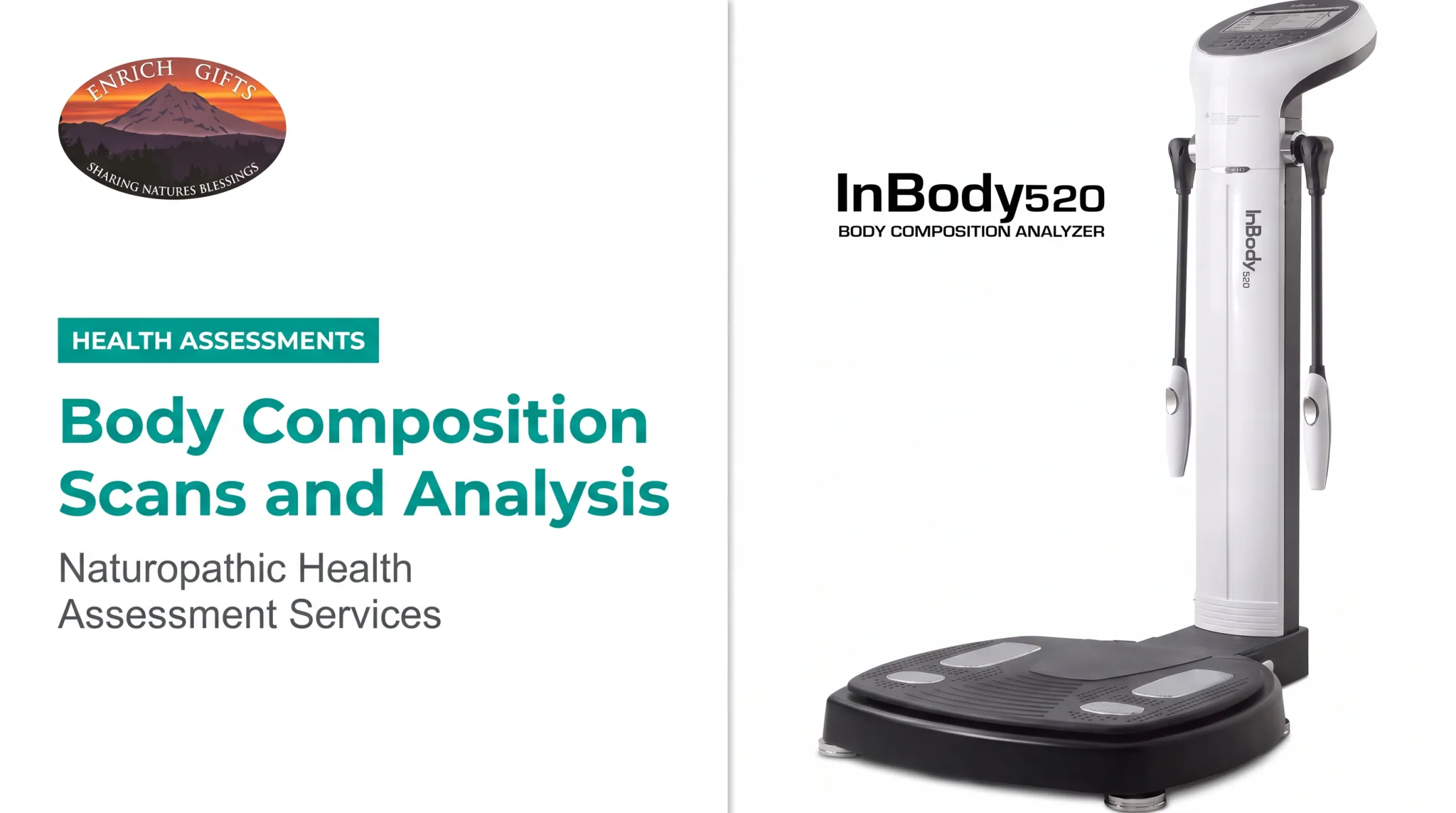
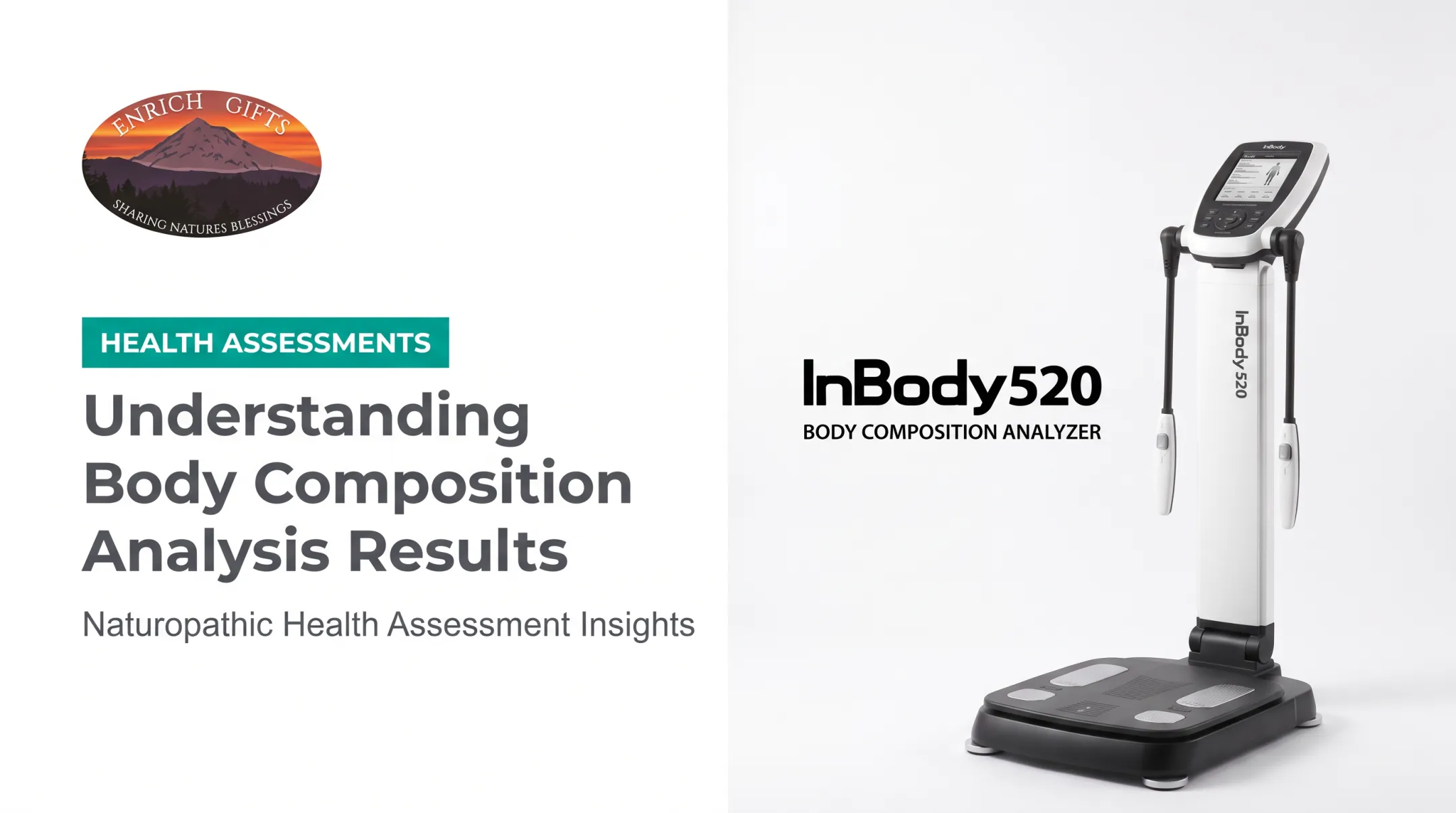
Enrich Gifts offers InBody 520 body composition consultations with Dr. Carolyn Johansen, N.D., in Arlington, Texas. Dr. Johansen completed her doctorate in naturopathy in 2012 and brings a whole-body, root-cause approach to interpreting what a BCA report actually means for you.

Rather than handing over a printout and sending you on your way, she reviews results in the context of your goals, lifestyle, and broader wellness picture. The review is not a diagnosis or a guaranteed fix.
Working with Dr. Johansen gives you:
- Personalized, one-on-one guidance instead of a standardized, big-box approach
- Help connecting body-composition findings to realistic nutrition and lifestyle choices
- Flexible appointments, including home visits and Zoom follow-ups for ongoing guidance (InBody measurement is in person only)
- A free initial consultation to confirm whether InBody analysis fits your current goals
If you're curious whether an InBody assessment makes sense for you, contact Enrich Gifts about scheduling, preparation steps, and what follow-up with Dr. Johansen looks like.
Conclusion
A scale gives you one number. BCA gives you context — fat, muscle, water, and how those pieces shift over time, details weight and BMI can't show alone.
Real value comes from consistent trend tracking paired with professional interpretation that accounts for your training, age, and health history.
Use your results to ask better questions. Involve a healthcare professional if something looks unexpected or symptoms raise concern.
Frequently Asked Questions
How much does a BCA body composition analysis cost?
Pricing varies by provider, technology, location, and whether interpretation or consultation is included. Ask your provider directly for current pricing.
How is a BCA body composition analysis done?
Most providers use bioelectrical impedance analysis (BIA). You stand on or hold contact points while a low-level current passes through your body, and the device calculates composition from the resulting impedance. Follow preparation instructions for accurate results.
How long does a BCA body composition analysis take?
The scan itself is typically quick, often under a minute, but total appointment time depends on intake and whether a consultation is included. Confirm expected length directly with your provider.
How do I get a BCA body composition analysis?
Contact a wellness provider or clinic that offers the service. Ask which technology they use, whether interpretation is included, and whether in-person testing is available at that location.
What is BCA body composition analysis?
BCA is an assessment of what your body is made of, typically fat mass, lean or muscle mass, and body water, rather than a single weight figure. Exact outputs depend on the method and device used.
Is a BCA body composition analysis worth it?
For people who want structured progress tracking or personalized guidance beyond the scale, it can be genuinely useful. Its value depends on consistent testing conditions, sound interpretation, and realistic expectations about what one reading can and can't tell you.