Introduction
Step on a scale and you get one number. That number can't tell you how much is fat, muscle, bone, or water, and it definitely can't tell you if last month's "progress" came from losing fat or losing muscle.
That's why so many people turn to body fat testing. If you're managing weight or training toward a specific goal, a body fat percentage adds context that the scale alone can't give you.
The gap between weight and body composition is bigger than most people assume. In a study of 1,393 patients, 39% were classified as non-obese by BMI but obese when body fat was measured with DXA scanning. That's a meaningful blind spot.
Every body fat test produces an estimate, not a diagnosis. Some methods are more precise than others, and none replace a conversation with a qualified healthcare professional. This guide walks through the main testing options, what drives accuracy, and how to use the results with appropriate context.
Key Takeaways
- Body fat percentage estimates fat mass; body composition covers fat, lean mass, bone, and water together
- DEXA, BIA, skinfolds, hydrostatic weighing, air displacement, and tape measurements each trade off accuracy, cost, and convenience differently
- Consistent conditions (time of day, hydration, food intake) matter more than the device itself for tracking change
- A single result means little without context: age, sex, muscle mass, waist size, and personal goals
What Is Body Fat Testing?
Body fat testing uses measurements or technology to estimate how much of your total body weight is fat tissue—not muscle, bone, or water. That figure is separate from scale weight and from BMI.
BMI only compares weight to height. The CDC is direct about this limitation: BMI cannot separate fat from muscle, and it says nothing about where fat is stored on the body. A bodybuilder and someone with a high fat percentage can land on the same BMI number for very different reasons.
Subcutaneous vs. Visceral Fat
Fat also isn't one uniform tissue:
- Subcutaneous fat sits just beneath the skin
- Visceral fat lies deeper in the abdomen, around internal organs
Most body fat tests return a percentage. They usually won't show which fat type you carry or diagnose related health risk on their own.
The Four Main Testing Categories
Most body fat tests fall into one of these buckets:
- Home or field methods – tape measurements, home BIA scales, skinfold calipers
- Professional BIA testing – clinic or gym-based devices like InBody analyzers
- Imaging-based methods – DEXA/DXA scans
- Laboratory or research methods – hydrostatic weighing, air displacement (Bod Pod)
Choosing Between Them
Before picking a method, weigh these factors:
| Factor | Question to ask |
|---|---|
| Purpose | One-time snapshot or ongoing tracking? |
| Accuracy needed | Research-grade detail, or a usable trend? |
| Cost | Can you afford to repeat it regularly? |
| Availability | Is it near you, or does it require travel? |
| Comfort | Water immersion, chambers, or skin contact—any dealbreakers? |
| Repeatability | Will you actually use the same method again? |
Repeatability is the factor people skip most often—and the one that makes trend tracking useful.
Why Body Fat Testing Is Useful
Scale weight hides a common scenario: someone loses fat while gaining or maintaining muscle, and the number on the scale barely moves. Body fat testing catches what the scale misses.
It also sharpens goal-setting. Picking a target weight without accounting for muscle mass, bone structure, age, or sex often sets people up for frustration. A baseline body composition reading gives you a more realistic target.
Trends Beat Single Readings
One test is a snapshot. A series of tests, done the same way each time, shows direction:
- A single number carries built-in measurement error
- Conditions (hydration, timing, recent exercise) shift results from day to day
- Patterns across weeks or months are harder to fake than one reading
Body composition data works best alongside other markers, not instead of them. Waist circumference, blood pressure, lab work, physical function, sleep quality, and energy levels all add pieces to the puzzle.

When to Loop In a Healthcare Professional
Some situations call for clinical input before or after testing:
- Pregnancy — fluid shifts affect accuracy, and some providers won't test during pregnancy
- Implanted medical devices — pacemakers and similar devices can be incompatible with certain BIA equipment
- Unexplained weight change — Mayo Clinic flags unintentional loss of more than 5% of body weight over 6 to 12 months as worth discussing with a doctor
- Eating-disorder history — body-focused numbers can do more harm than good without proper support
- Chronic illness with fluid retention — conditions affecting hydration can skew BIA results
If any of these apply to you, check with a healthcare professional before acting on a body fat result.
How Body Fat Testing Works
Every method estimates fat and lean tissue from a different input: electrical resistance, skinfold thickness, body density, X-ray attenuation, or simple body measurements. None of them weigh your fat directly.
Step 1: Define Your Goal
Are you after a detailed one-time assessment, or ongoing progress tracking? The answer changes what you need. Don't book a research-grade scan if what you actually need is a repeatable method for weekly check-ins.
Step 2: Choose a Method
Here's how the common options stack up:
| Method | What it measures | Strengths | Limitations |
|---|---|---|---|
| DEXA/DXA | Bone, lean mass, fat via X-ray | Regional detail | Requires a facility; not a perfect "true" measurement |
| Professional BIA (InBody) | Fat, muscle, water via impedance | Fast (under a minute), no radiation | Affected by hydration and timing |
| Home BIA scale | Similar to above, consumer-grade | Convenient, repeatable at home | Results vary by device and brand |
| Skinfold calipers | Subcutaneous fat at select sites | Portable, inexpensive | Highly dependent on operator skill |
| Hydrostatic weighing | Body density via water displacement | Long-standing reference method | Requires full submersion, specialized setup |
| Air displacement (Bod Pod) | Body density via air displacement | No water needed | Clothing/hair can skew results |
| Tape measurements | Circumference-based estimate | Cheap, accessible anywhere | Lower precision, varies by sex and build |
A 2021 study using air displacement testing found the technical error for a single trial was 1.00 percentage point, improving to 0.62 with a repeated-trial protocol. The lesson generalizes: one reading carries more noise than a series of readings taken consistently.
Step 3: Prepare Consistently
Preparation varies by method, but general principles apply:
- Test at a similar time of day, ideally morning
- Avoid eating or exercising for a few hours beforehand
- Keep hydration levels consistent
- Use the restroom before testing
- Follow your provider's specific instructions exactly
Skipping this step is the fastest way to get a misleading week-to-week comparison.
Step 4: Review the Result in Context
A number without context isn't useful. Factor in the method's known margin of error, your age, sex, muscle mass, and waist measurement before drawing conclusions. And resist the urge to overhaul your diet or supplement routine based on a single reading.
Step 5: Track and Reassess
Write down the date, method, and testing conditions every time. A method you'll actually repeat under similar conditions beats a theoretically more precise one you'll only use once.

A Quick Example
Picture someone whose scale weight barely moves over two months, but their clothes fit differently and their strength in the gym has improved. A body fat test can help explain why.
- A home BIA scale might show a modest shift
- A professional InBody BIA session might show a different number due to better electrode placement
- A DEXA scan might show yet another figure, with regional detail the others can't provide
These numbers shouldn't be compared directly against each other. Common mistakes that throw off comparisons include:
- Testing right after a workout
- Switching devices between sessions
- Ignoring hydration swings
- Obsessing over one percentage point instead of the overall trend
The fix: pick one method, stick with it, and review results periodically alongside other wellness markers.
How Enrich Gifts Can Help
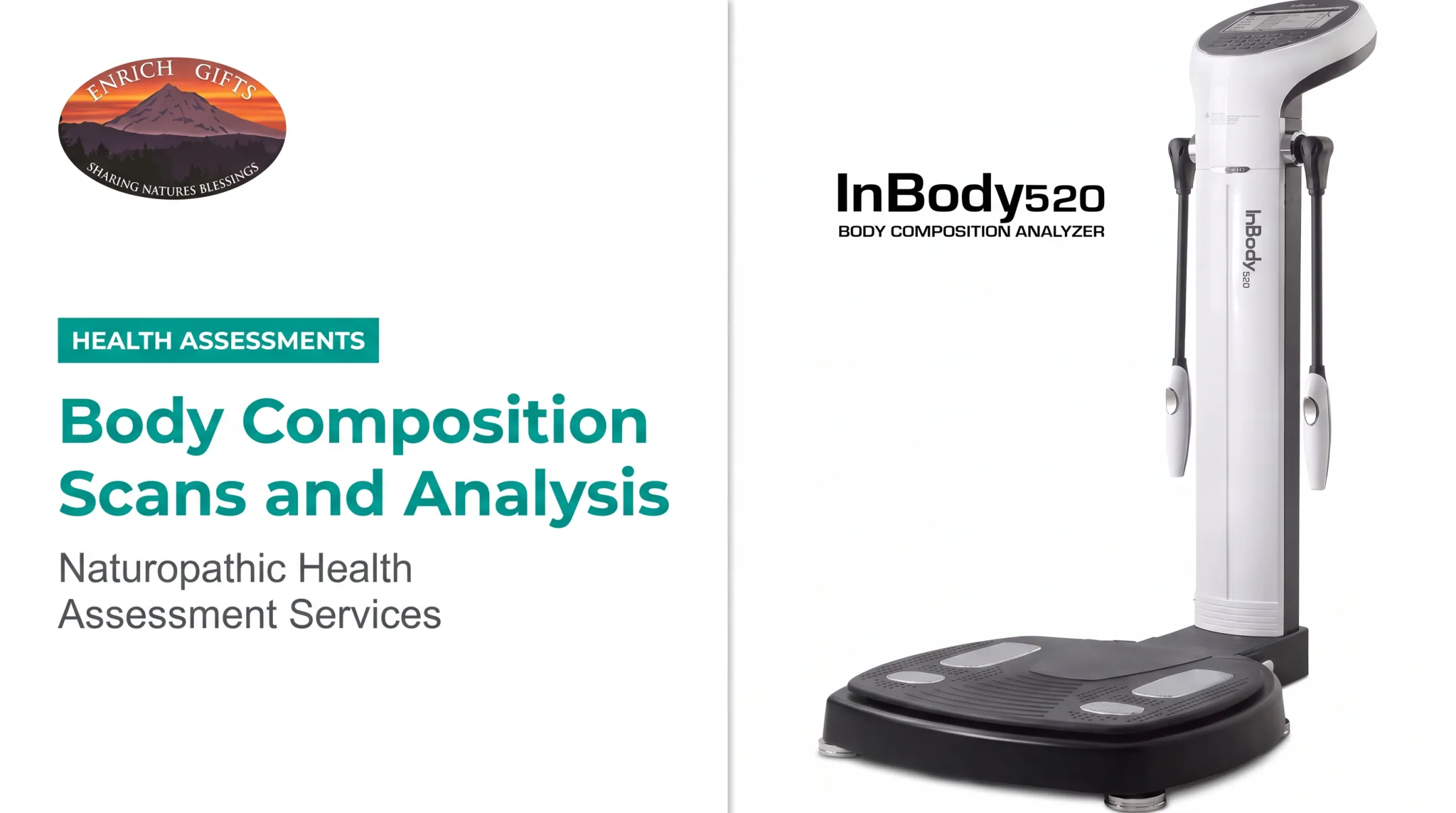
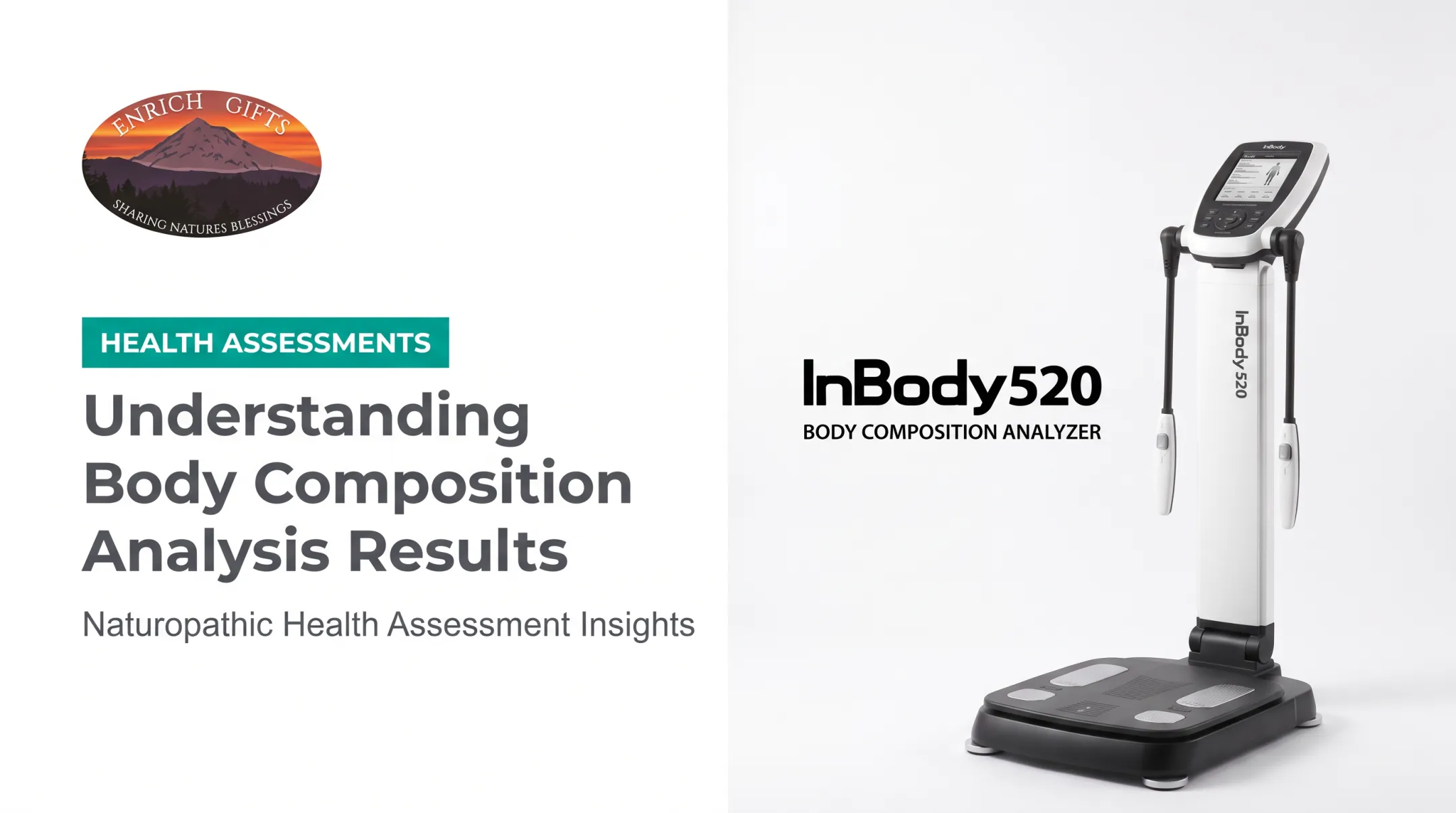
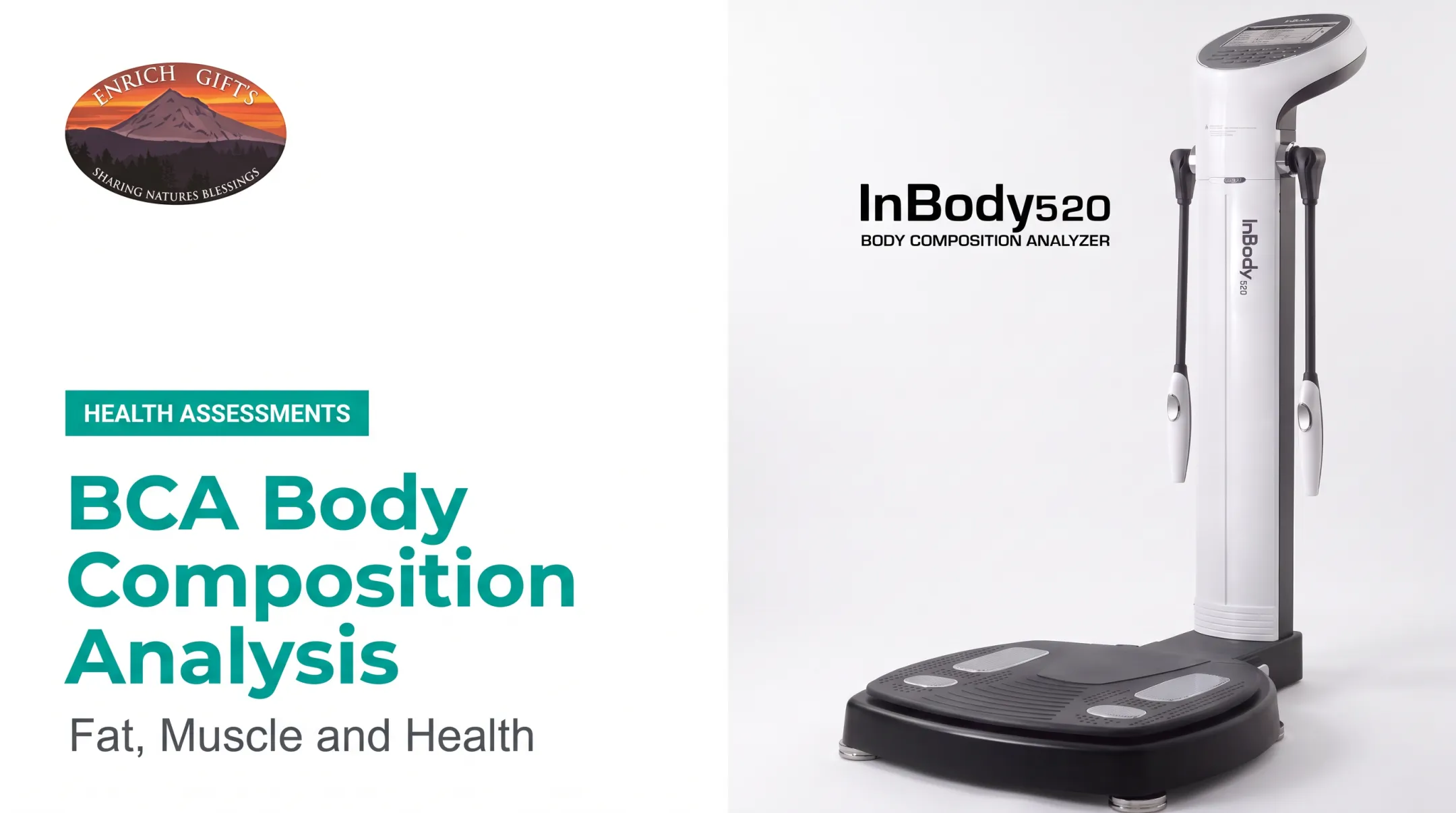
At Enrich Gifts in Arlington, Texas, Dr. Carolyn Johansen, N.D., offers InBody 520 body composition analysis as part of a broader naturopathic, root-cause approach to wellness.
The InBody 520 uses eight-point tactile electrodes across five body segments (arms, legs, and torso) to measure:
- Percent body fat and body fat mass
- Lean body mass and skeletal muscle mass
- Total body water and hydration balance
- Visceral fat level and BMI
The scan itself takes under 45 seconds, is painless, radiation-free, and non-invasive. You receive a printed color report, so you can track fat loss, muscle gain, and water balance from one visit to the next.
Dr. Johansen reviews each client’s results in the context of their goals, lifestyle, and other functional testing, which can include thermography, OligoScan, and cardiovascular and stress screening. InBody testing complements this work rather than replacing lab testing or imaging.

Body fat testing through Enrich Gifts is not a substitute for diagnosis or conventional medical care when a medical evaluation is needed. It’s one more data point for understanding your body, interpreted with professional guidance.
Conclusion
Body fat testing fills in gaps that scale weight and BMI simply can't address. It gives you a clearer view of what's changing in your body, whether that's fat loss, muscle gain, or shifts in hydration.
But every method, from a $20 home scale to a $150 DEXA scan, produces an estimate with its own margin of error. None of them are infallible, and none should be read in isolation.
To get the most from testing:
- Pick a method that matches your purpose and budget
- Keep your testing conditions consistent
- Take confusing or concerning results to a qualified healthcare professional who can help you interpret them
Frequently Asked Questions
How can I test my body fat percentage?
Options range from home BIA scales and skinfold calipers to professional InBody analysis, DEXA/DXA scans, and lab-based methods like hydrostatic weighing. Accuracy and availability vary widely, so match the method to your goal and budget.
What is the most accurate test for body composition?
Accuracy depends on which reference method you compare against and what you're trying to learn. DEXA is often used as a strong reference, but it can still disagree with multi-compartment research models—no method is perfect.
Is a DEXA scan worth it for body fat?
DEXA's regional detail (showing fat distribution by body area) can justify the cost for a one-time, in-depth assessment. For ongoing tracking, a consistent professional BIA method is often more practical and affordable.
How much does a DEXA scan cost?
Non-medical DEXA scans for body composition typically run $100–$200 in the US, though pricing varies by provider, location, and whether insurance applies. Always confirm current pricing directly with the facility.
What is a good body fat percentage for my age?
Reference ranges shift by age, sex, and the measurement method used, so there's no single universal target. Interpret your result alongside overall health and personal goals, not a generic chart alone.
Can BMI measure body composition?
No. BMI uses only height and weight, so it can't distinguish fat from muscle or show where fat is distributed on the body. It's a screening tool, not a body composition measurement.