Understanding the distinction is crucial. The provider’s education, legal scope of practice, available testing, and treatment options can vary significantly. This affects the type of care you receive, what it costs, and whether insurance might play a role.
This article will break down the differences and similarities between naturopathic and functional medicine. We won’t declare a universal winner, because the best fit depends entirely on you. Instead, we’ll give you the information you need to make an informed choice, reminding you to always verify credentials and consult qualified healthcare professionals for your medical concerns.
Key Takeaways
- Naturopathic medicine is a distinct healthcare profession, while functional medicine is a systems-based care model that practitioners from various backgrounds can adopt.
- Both approaches look beyond symptoms to consider lifestyle, nutrition, environment, and other factors that contribute to your health.
- Licensed naturopathic doctors (NDs) complete a dedicated four-year, graduate-level naturopathic medical program. Functional medicine practitioners add this training to an existing healthcare credential (like MD, DO, or ND).
- Your state’s laws determine a provider's scope of practice, including the authority to prescribe medication.
- The right choice depends on your health goals, budget, and preference for natural therapies versus an integrated approach.
Naturopathic vs. Functional Medicine: A Quick Comparison
While both fields aim to find the root cause of health issues, their foundations and frameworks differ. Here’s a side-by-side look at their core principles.
Primary Philosophy
- Naturopathic Medicine: Supports the body’s innate ability to heal (Vis Medicatrix Naturae), with prevention, patient education, and natural therapies first. Licensed NDs still train in biomedical sciences and may use conventional diagnostics within their legal scope.
- Functional Medicine: A systems-biology model that asks why a problem exists by mapping imbalances across interconnected body systems. It links genetics, lifestyle, and environment into a personalized plan.
Practitioner Training
- Naturopathic Medicine: In licensed states, NDs complete an accredited four-year naturopathic medical school and pass the NPLEX. Training covers biomedical sciences, clinical nutrition, botanical medicine, and physical medicine. The title “naturopath” is not protected in every state and can reflect different training levels.
- Functional Medicine: Usually an add-on certification for licensed clinicians such as MDs, DOs, NPs, PAs, or NDs. Groups like The Institute for Functional Medicine (IFM) offer programs, but the credential does not grant additional legal or specialty status or expand a provider’s original scope of practice.
Diagnostic Approach
- Naturopathic Medicine: Often includes a detailed health history, physical exams (where permitted), lifestyle and diet analysis, and standard labs. Some providers also use specialized functional assessments when scope and needs allow.
- Functional Medicine: Starts with an extensive intake—often a timeline from birth to the present—to spot patterns and triggers. Practitioners use conventional labs and may add specialty tests (hormone, gut, or nutrient panels) when warranted; more testing isn’t always better, and validity varies.
Treatment Focus
- Naturopathic Medicine: Focuses on lifestyle changes, clinical nutrition, botanical remedies, targeted supplements, and stress management.
- Functional Medicine: Also relies on nutrition, lifestyle changes, and supplements. With the right underlying license, practitioners may prescribe medications, refer to specialists, and coordinate care with your primary doctor.

What Is Naturopathic Medicine?
Naturopathic medicine is a distinct healthcare discipline that blends modern scientific knowledge with traditional and natural forms of medicine. The practice is guided by six core principles, including treating the whole person, identifying and treating the cause, and prevention.
In the U.S., there are currently 26 jurisdictions with ND licensing or registration laws. In these places, the title "naturopathic doctor" is protected and requires specific education and examination. In other states, "naturopath" may be used by people with very different training backgrounds, so verify credentials before you book.
An initial naturopathic consultation is typically longer than a conventional doctor’s visit. You can expect an in-depth conversation about your health history, diet, stress levels, and wellness goals. The provider will review your medications and supplements and may perform a physical assessment.
At Enrich Gifts, for example, Dr. Carolyn Johansen provides naturopathic consultations through home visits in the Arlington, Texas area and virtual appointments via Zoom. As part of her personalized wellness guidance, she may use selected assessments to uncover what the body is communicating, including:
- Whole Body Thermography: A non-invasive screening that measures heat patterns to assess physiological function.
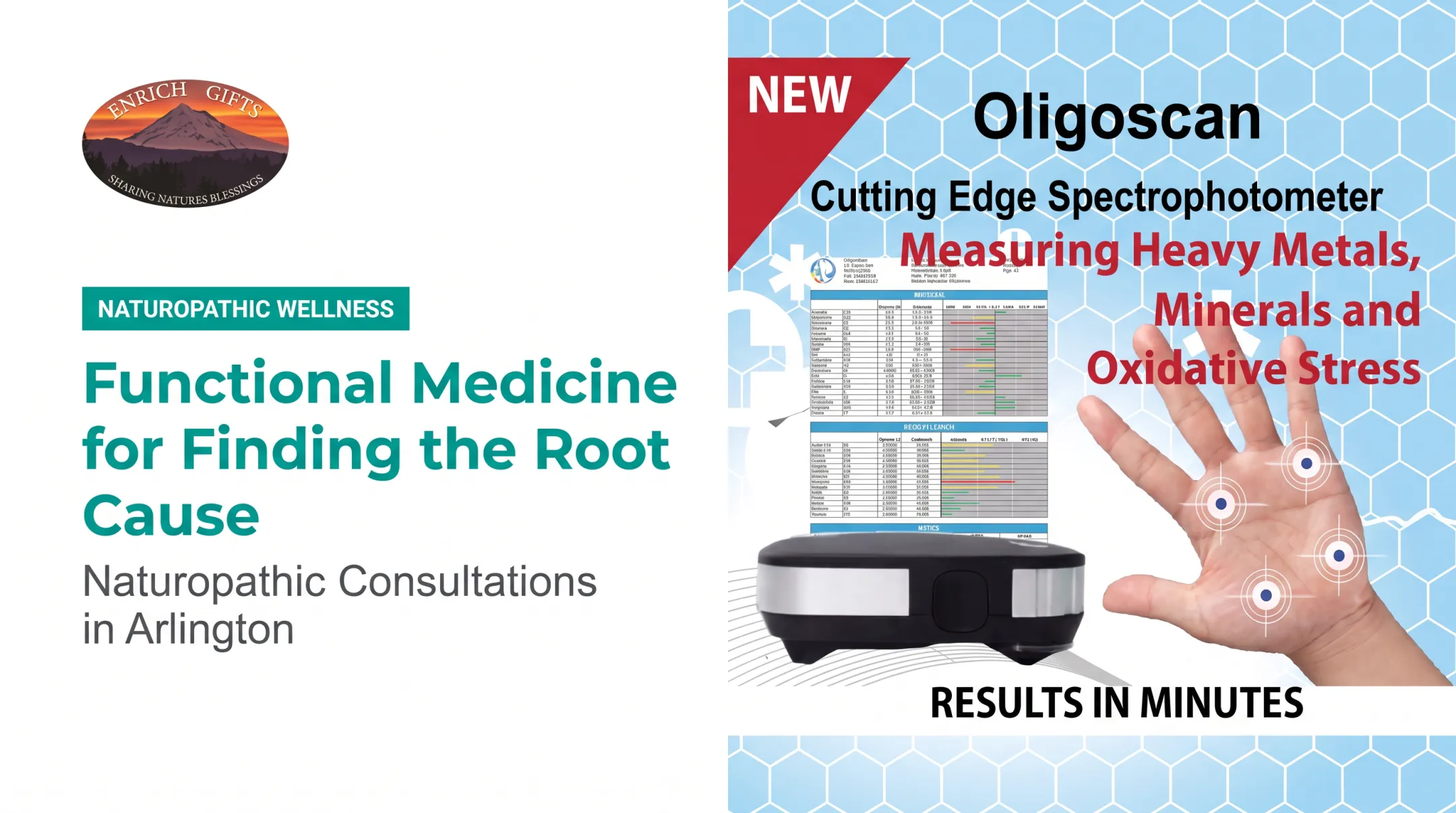
- OligoScan: Real-time analysis of minerals, trace elements, and heavy metals.
- Cardiovascular and Stress Screening (CSS): Assessment of the autonomic nervous system and cardiovascular health.
- InBody Analysis: Body composition breakdown, including muscle mass and body fat.
These tools are part of Dr. Johansen's approach and are not required components of all naturopathic care. The goal is always to create a customized plan that fits your individual needs and lifestyle.

Use Cases of Naturopathic Medicine
People often turn to naturopathic care when they want a proactive, whole-person approach. Common reasons include:
- Preventive wellness and nutrition planning
- Clarity on persistent symptoms and next questions to ask
- Behavior-change support and supplement safety review
- Building a sustainable wellness plan alongside conventional care
For instance, a 2012 study looked at patients with type 2 diabetes who received adjunctive naturopathic care alongside their primary care. While the study had limitations, patients reported improvements in self-care. That self-care focus is a practical role for naturopathic support: giving patients clearer tools and habits they can use between conventional visits.
What Is Functional Medicine?
Functional medicine is not a separate profession but a specific clinical model. Think of it as a way of organizing information to connect the dots between a patient's symptoms, genetics, and lifestyle factors.
Instead of asking "What drug matches this disease?" a functional medicine practitioner asks "Why has this person lost function?" and "What can we do to restore it?"
Practitioners come from diverse backgrounds. Your functional medicine provider might be an MD, NP, or ND who has completed additional training. You should always verify the provider's primary license first, as this determines their legal scope of practice.

A typical functional medicine workup is detailed. It involves:
- Extended Intake: A deep dive into your personal and family health history.
- Health Timeline: Mapping your symptoms and life events chronologically to identify potential triggers.
- Targeted Testing: Using standard and, if necessary, specialty lab tests to investigate underlying imbalances in hormones, gut health, or nutrient levels.
- Personalized Plan: Creating a plan that may include dietary changes, supplements, stress management techniques, and, if the provider is licensed to do so, prescription medications.
This structured approach may appeal to patients with complex or chronic concerns who feel they haven't found answers elsewhere. However, the costs for consultations and specialty testing can be significant and are often not covered by insurance.
Use Cases of Functional Medicine
A patient with chronic fatigue, for example, might find the functional medicine model helpful. Instead of focusing only on the fatigue itself, the practitioner systematically investigates contributors such as:
- Sleep patterns
- Nutritional deficiencies (iron or B12)
- Thyroid function
- Stress hormone levels
- Potential gut health issues
Functional medicine should be coordinated with your primary care physician or other specialists. That coordination matters most when managing prescriptions, dealing with serious illnesses, or interpreting abnormal test results.
Which Is Better: Naturopathic or Functional Medicine?
Neither approach is automatically "better." The best choice is the one that aligns with your specific health needs, the provider's credentials, and your state's regulations. The most important comparison is between individual practitioners, not the labels themselves.
Before committing to a provider, ask these questions:
- Credentials and scope: What is your primary license (such as MD, DO, ND, or NP), and are you licensed in my state?
- Clinical authority: Can you prescribe medication, order lab tests, and make referrals?
- Testing: Which tests do you recommend, why, and how will the results change my plan?
- Test validity and cost: Are the tests clinically validated, and what is the out-of-pocket cost?
- Treatments: What therapies or supplements are you proposing, and have you checked for interactions with my medications or conditions?
- Logistics and cost: What are visit fees, do you accept insurance or provide a superbill, and what time commitment should I expect?
Situational Guidance
- Choose a naturopathic doctor if you want a provider whose full framework centers on natural medicine, lifestyle coaching, and prevention.
- Consider a functional medicine practitioner when you want systems-based evaluation from someone with an underlying license (such as an MD or NP) who can blend conventional and complementary care.
- Many people do best with a coordinated approach: naturopathic guidance for lifestyle and nutrition, plus a primary care physician or specialists for conventional medical management.
A retrospective cohort study from Cleveland Clinic found an association between its functional medicine model and improvements in patient-reported quality of life. In both naturopathic and functional models, the value usually comes from personalized attention, deeper investigation, and patient empowerment, not a promised outcome.
If you are in the Arlington, Texas area and want naturopathic guidance, learn about Dr. Carolyn Johansen’s personalized approach at Enrich Gifts. You can schedule a complimentary phone call to discuss your health goals and see whether her services fit.
Conclusion
Both naturopathic and functional medicine move past a one-size-fits-all model. They share common ground in personalized, root-cause-oriented care. The key difference is in their origins: naturopathic medicine is a distinct profession with a dedicated training path, while functional medicine is a clinical model that practitioners from many fields can adopt.
Your health journey is personal. Choose care where you feel heard, respected, and able to take part in decisions. Before you commit:
- Verify the provider’s credentials
- Ask how they build recommendations
- Disclose every medication and supplement you take
- Keep your primary care team involved for routine and urgent needs
Frequently Asked Questions
What are the key differences between a functional doctor and a naturopath?
A functional medicine practitioner uses a systems-oriented model and can hold various credentials (MD, DO, ND, etc.). A licensed naturopathic doctor (ND) follows a dedicated educational path focused on natural medicine. Scope of practice and titles vary by state.
Is an ND as good as an MD?
It depends on what you need. MDs train in conventional medicine with hospital residency and a broad scope that can include surgery and advanced pharmacology. Licensed NDs focus on wellness, prevention, and natural therapies, with a scope that varies by state.
What is the difference between a naturopathic doctor and a naturopathic practitioner?
Title rules differ by state. "Naturopathic doctor" (ND) is often a protected title for graduates with specific licensing. "Naturopathic practitioner" or "naturopath" may reflect other training paths, so always verify credentials.
What is the difference between holistic and functional medicine?
"Holistic" is a broad philosophy meaning to treat the whole person (mind, body, spirit). Functional medicine is a more defined clinical model that systematically investigates the underlying genetic, lifestyle, and environmental factors causing disease.
Why would someone go to a naturopath?
People may seek naturopathic care for preventive wellness, nutrition and lifestyle support, or help with chronic issues. Many want to explore natural therapies or work with a practitioner who can help them navigate health questions.
Can a naturopath test cortisol levels?
The authority to order lab tests depends on the provider's license and state regulations. In states where they are licensed to do so, an ND can order tests like salivary or urine cortisol. Always ask why a test is needed and how it will guide your care.