Many people land here after a frustrating pattern: persistent fatigue, brain fog, or digestive issues, paired with lab results that come back "normal." That gap between how you feel and what the paperwork says is real, and it's one reason some people explore naturopathic testing alongside conventional care rather than instead of it.
This article covers the types of tests a naturopath may consider, what actually happens during an assessment, how to interpret results responsibly, and how to prepare so you get the most out of any test you order.
Key Takeaways
- Match testing to your symptoms and goals: standard labs, specialty functional tests, or non-lab assessments.
- Skip one-size-fits-all panels; choose tests that drive a clear next step, not extra data.
- Confirm licensing, test access, and insurance coverage in your state before you book.
- Share your full medication, supplement, and diagnosis history with every provider on your care team.
What Is Naturopathic Lab Testing?
Naturopathic lab testing uses laboratory data as part of a broader, whole-person assessment. That picture includes your symptoms, medical history, diet, sleep, stress levels, environment, and daily habits. A number on a page means little without that context.
It helps to separate three different categories:
- Conventional diagnostic tests — think CBC, comprehensive metabolic panels, or HbA1c. These have established reference ranges and clinical guidelines behind them.
- Specialty or functional tests — organic acids, stool microbiome panels, or bioimpedance analysis. Some have narrow, well-supported uses; others are better described as emerging or wellness-oriented.
- Wellness assessments — tools like thermography or body composition scans that offer information but aren't validated as stand-alone diagnostic tools.
Why a Naturopath Might Recommend Testing
Reasons typically include:
- Investigating symptoms that haven't resolved with standard care
- Checking for possible nutrient or metabolic gaps
- Monitoring an existing, previously diagnosed condition
- Establishing a baseline before starting a wellness plan
- Guiding supplement or lifestyle recommendations
Good testing is hypothesis-driven. A practitioner should explain what a test measures, why it matters for you, its limitations, and what changes based on the result. If nobody can answer "what will we do differently based on this number," question the test before you pay.
Separate correlation from causation. Finding a biomarker outside a typical range doesn't prove it caused your symptom.
A National Academies review on biomarker evaluation notes that even a strong association with an outcome, backed by biological plausibility, isn't enough to establish a biomarker as a valid stand-in for a clinical result. Analytical validity and fitness for the specific use still need assessment.
Common Types of Tests a Naturopath May Consider
The categories below are examples, not a universal checklist. What's available and appropriate depends on your practitioner, your situation, the laboratory used, and your state's regulations.
Standard Blood and Metabolic Testing
Routine bloodwork often includes:
- Complete blood count (CBC)
- Comprehensive metabolic panel
- Lipid testing
- Fasting glucose and HbA1c
These assess blood cell health, kidney and liver function, cardiovascular risk, and blood sugar control over roughly three months.
Context matters more than the raw number. A fasting glucose test needs at least eight hours without food; HbA1c does not require fasting. If routine labs flag something concerning, that finding should prompt conventional medical follow-up — not just supplements or dietary tweaks.
Hormone, Thyroid, and Stress-Related Testing
Thyroid markers (TSH, free T4, sometimes T3 and antibodies), reproductive hormones, and cortisol-related testing are often considered for fatigue, sleep disruption, menstrual changes, or unexplained energy shifts.
Timing and method shape what the result means:
- Reproductive hormone tests usually must align with a specific point in the menstrual cycle
- Cortisol may be measured in blood, saliva, or urine, depending on the clinical question
- A single cortisol value taken at the wrong time of day tells you very little on its own
Nutritional and Inflammation-Related Testing
Vitamin D, B12, iron studies, folate, and inflammatory markers like CRP may come up when symptoms, diet, or risk factors support looking into them. Broad, routine screening in this area isn't always backed by current guidance.
The Endocrine Society's 2024 prevention guideline, for example, recommends against routine vitamin D testing in generally healthy adults, reserving it for people with an established indication such as hypocalcemia. That doesn't mean vitamin D testing is never useful — it means the decision should rest on a specific reason, not a blanket "check everything" approach.
Specialty Functional and Environmental Testing
This category includes stool or gastrointestinal testing, food allergy testing through appropriate medical channels, heavy-metal testing, urine organic acids, and genetic or nutrigenomic testing. Sample types vary — blood, urine, stool, saliva, or hair — and each test only measures what it was designed to measure.
Key cautions:
- Food IgG testing is not a validated allergy test. The American Academy of Allergy, Asthma & Immunology states that food-specific IgG often reflects normal exposure and tolerance, not an allergic reaction.
- "Provoked" urine metal testing lacks scientific validation. Standard reference ranges don't apply after a chelating agent.
- Organic acid testing has a narrow established use — screening for inborn errors of metabolism — not as a general "detox" or vague-symptom panel.
Enrich Gifts' Assessment Approach
Enrich Gifts, through Better You Health in Arlington, Texas, offers naturopathic consultations with Dr. Carolyn Johansen via home visits or Zoom. Her assessment toolkit includes:
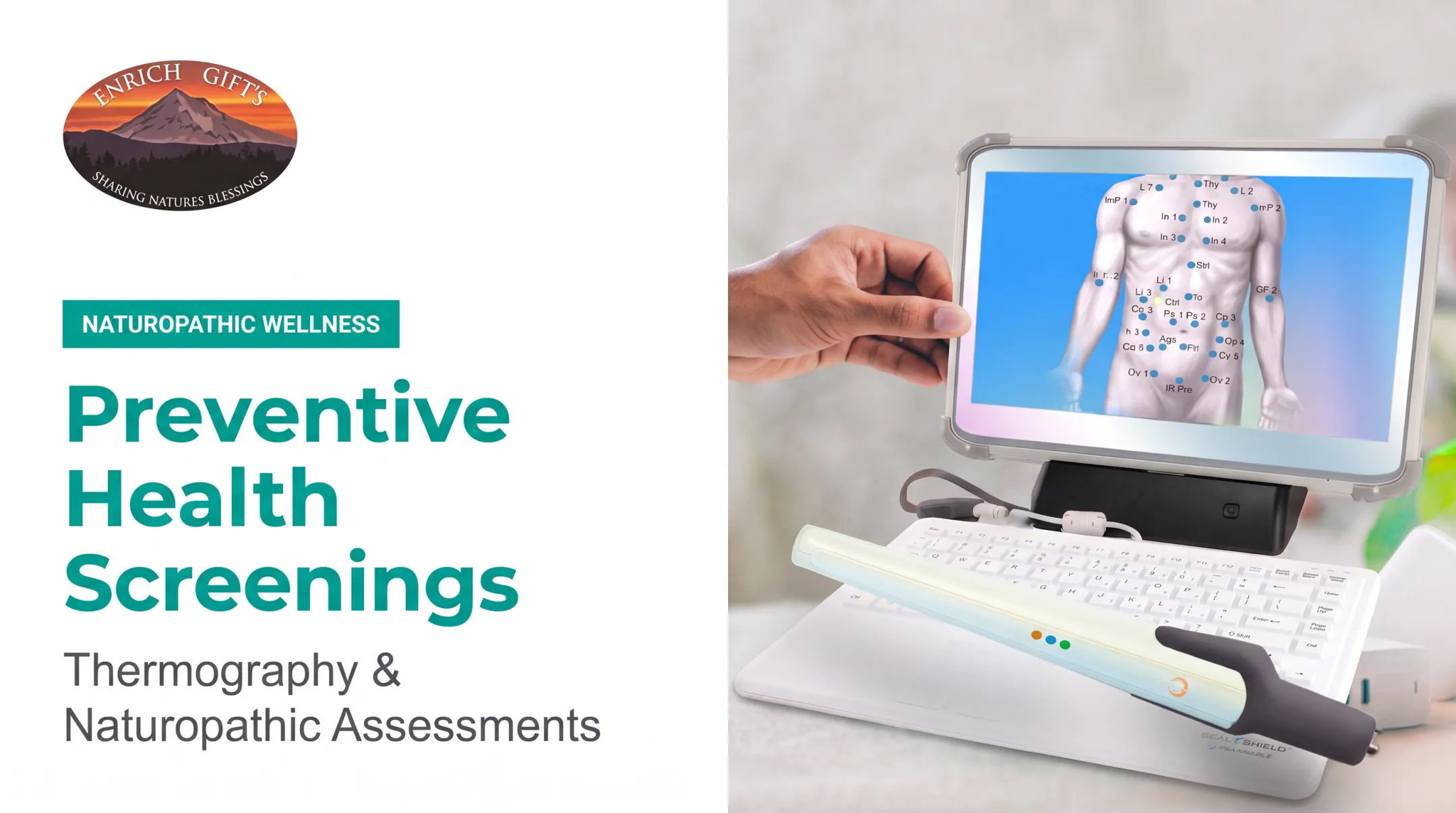
- Thermography
- OligoScan
- Cardiovascular and stress screening
- InBody body composition analysis
These four assessments are designed to work together and take roughly two hours total, including a visit to review results. OligoScan can also be booked on its own between thermography sessions for anyone tracking changes over time.

These tools are assessments that feed into a personalized wellness plan, not automatic diagnoses. Thermography, for instance, captures surface heat patterns. The FDA has stated that thermography hasn't been shown effective as a stand-alone breast cancer screening tool and that FDA-cleared devices are meant as adjuncts, not replacements for mammography. Whatever assessment you're considering, ask directly what it measures and how the result will actually change your plan.
How Naturopathic Testing Works During an Assessment
A naturopathic assessment typically starts long before any sample is collected.
The Initial Consultation
Expect a detailed conversation covering:
- Your symptoms and their timeline
- Medical and family history
- Current medications and supplements
- Diet, sleep, stress, and activity patterns
- Environmental exposures
- Your specific health priorities
Dr. Johansen's intake process at Enrich Gifts follows this pattern. Health history and intake forms often reveal useful patterns; targeted testing fills in what the conversation alone cannot.
Deciding Whether Testing Is Warranted
A responsible practitioner weighs several factors before ordering labs:
- The clinical question being asked
- What is already known from history and prior results
- How urgent the issue is
- Your preferences and readiness
- Whether the result is likely to change the plan
Testing for the sake of testing isn't the goal.
The Practical Process
Once testing is appropriate, the general flow looks like this:
- Referral or order placed (where legally permitted)
- Sample collection, following any required preparation
- Laboratory processing
- Result review with your practitioner
- A follow-up plan based on findings

Several factors can skew results if ignored:
- Fasting status and hydration
- Time of day and menstrual-cycle timing
- Recent exercise or acute illness
- Current medications or supplements
Even biotin can throw off thyroid results if taken too close to a blood draw.
A good practitioner connects results back to your symptoms and history rather than reacting to an isolated number.
If a result points outside naturopathic scope—imaging, prescription treatment, specialist care, or urgent evaluation—referral to a medical doctor should happen without delay.
Understanding Results, Evidence, and Safety
Reference Ranges Aren't the Whole Story
A standard laboratory reference range is typically built to include about 95% of apparently healthy people. That means roughly 1 in 20 people without any disease will still fall outside the "normal" range just by chance. The reverse is also true: a result inside the range doesn't guarantee nothing's wrong. Clinical decision thresholds based on outcome data can differ from the reference range entirely.
Where Testing Can Go Wrong
Common limitations include:
- Biological variation between individuals and even day to day
- Collection or lab processing errors (a 2024 review found preanalytical issues account for roughly 60-70% of total laboratory errors)
- False positives and false negatives
- Incidental findings that create new worry without clinical significance
- Large panels ordered without a clear question, raising the odds of a meaningless outlier

Evidence Varies by Test
Not every test carries the same weight of evidence. Established diagnostic tests like HbA1c or a lipid panel have decades of outcome data behind them. Emerging biomarkers and wellness-oriented assessments may offer useful information but shouldn't be treated with the same certainty.
A single abnormal result also doesn't prove causation. It shouldn't be the sole justification for restrictive diets, aggressive detox protocols, or high-dose supplementation.
Those limits on interpretation are why safety steps matter as much as the numbers on the report.
Safety Basics
- Disclose every prescription and supplement you're taking so interactions can be checked
- Ask specifically about interactions or contraindications before new protocols
- Follow preparation instructions exactly (fasting, timing, and sample handling)
- Seek conventional medical care immediately for urgent or alarming symptoms
Licensing and Access Vary by State
Naturopathic licensing, test-ordering authority, laboratory access, and insurance reimbursement all differ by state. The American Association of Naturopathic Physicians lists licensing or registration laws in 23 states plus DC, Puerto Rico, and the U.S. Virgin Islands.
A law on the books doesn't confirm any individual practitioner's credentials. Always verify directly with your state's regulatory authority.
Preparing for Naturopathic Lab Testing
A little prep before you book or show up helps you get clearer answers, avoid repeat draws, and walk in ready to act on the results.
What to Bring
- Recent lab reports and imaging results
- Medical records relevant to your concern
- A list of medications and supplements, including doses
- Allergy information and family history
- Notes on your symptoms and a short list of health goals
Questions to Ask Before You Book
- Does this test require fasting, medication adjustment, specific cycle timing, or exercise restrictions? (Never stop a prescribed medication without talking to the prescribing clinician first.)
- What exactly is this test measuring, and what decision depends on the result?
- How is the sample collected, and which laboratory processes it?
- What's the expected turnaround time?
- What's the total cost, and are insurance or self-pay options available?
- Is there a dedicated appointment to review results and plan next steps?
Choosing a Qualified Practitioner
Look for a practitioner who can show:
- Verifiable education and licensing
- Direct experience with your specific concern
- Transparent pricing
- Willingness to coordinate with other providers
- A clear, honest approach to evidence, including when referral is the right call
If you're weighing personalized support, Enrich Gifts' Dr. Carolyn Johansen offers consultations through home visits in Arlington, Texas, and Zoom appointments. A complimentary phone call is available to see if it's a good fit.
No specific outcome or diagnosis is promised. The goal is a clearer picture of what your body may be communicating and a plan built around it.
Frequently Asked Questions
What happens during a naturopath consultation?
Expect a review of your health history, current symptoms, and lifestyle factors like diet, sleep, and stress. The practitioner then discusses your goals and works with you to decide whether testing or a referral makes sense.
How long does a naturopath consultation usually last?
Duration varies by practitioner, appointment type, and how complex your case is. Confirm the expected length directly when booking rather than assuming a fixed time.
Can a naturopathic doctor diagnose medical conditions?
Scope of practice and diagnostic authority vary by state and by credential. Licensed naturopathic doctors differ significantly from unlicensed practitioners. Urgent or serious symptoms always warrant conventional medical evaluation.
Can a naturopath test cortisol levels?
Yes, through blood, saliva, or urine, depending on the clinical question being asked. Results need to be interpreted alongside your symptoms, medications, collection timing, and medical history. A single value rarely tells the full story.
Why would I see a naturopath?
Common reasons include personalized wellness guidance, prevention-focused support, and investigating persistent symptoms that haven't resolved elsewhere. Naturopathic care works best alongside, not instead of, necessary conventional treatment.
What tests does a naturopath do?
Tests may include standard bloodwork, nutritional and hormone panels, metabolic and digestive testing, or environmental assessments. The specific tests offered and the practitioner's legal authority to order them both depend on the state.