Introduction
Alternative medicine covers a wide range of health practices that sit outside conventional Western medical care. The label itself tells you nothing about whether a practice works or whether it's safe for your situation.
Interest in whole-person wellness has grown fast. More people want natural products, mind-body practices, and care that feels personalized rather than rushed. That's understandable, but enthusiasm isn't evidence.
In the 2022 National Health Interview Survey, 36.7% of U.S. adults reported using at least one of seven specified complementary approaches, nearly double the 19.2% reported in 2002.
This guide breaks down what separates alternative, complementary, integrative, holistic, and naturopathic care. Then it covers the major categories and a practical framework for choosing safely.
Key Takeaways
- Alternative medicine replaces conventional care; complementary medicine works alongside it; integrative medicine coordinates both.
- Main categories: nutritional/natural products, mind-body and physical practices, and traditional whole medical systems.
- Safety depends on your health goal, current treatment, evidence quality, and practitioner credentials.
- Talk to a qualified health professional before changing prescribed treatment or starting supplements.
What Is Alternative Medicine and Why Does It Matter for Health?
Alternative medicine is a broad term for practices, products, and systems not typically part of conventional medical care. The word "alternative" describes how something is used, not necessarily what it is.
A supplement, a breathing technique, or an herbal formula can all qualify. What makes any of them "alternative" is whether someone uses it in place of standard medical treatment, rather than alongside it.
Related Terms That Get Confused
These distinctions aren't just semantics. They change how you should evaluate risk.
- Complementary care is used together with conventional medicine, not instead of it.
- Integrative care coordinates conventional and complementary approaches into one plan.
- Holistic means attention to physical, mental, emotional, and lifestyle factors—and can still include conventional medication.
- Naturopathy and functional medicine often use lifestyle guidance, nutrition, and supplements; training, regulation, and scope vary by practitioner and state.
According to NCCIH's official definitions, mixing these labels up has real consequences.
Someone may delay effective care because a "natural" product sounds sufficient for a serious condition. Others treat a holistic-sounding label as proof of safety.
Judge the specific therapy, dose, condition, and person—not the marketing category. A testimonial about "all-natural pain relief" does not tell you whether that product and dose help your situation.

Types of Alternative Medicine
These categories are practical groupings, not rigid categories. A single practice, like Ayurveda, can involve nutrition, herbs, and physical movement all at once. Whether something counts as "alternative" still comes down to one question: is it replacing conventional care, or working alongside it?
Nutritional and Natural-Product Approaches
This category covers supplements, herbs, vitamins, minerals, probiotics, and special diets taken to support a health goal.
Before using any product, check:
- Evidence for your specific condition—not general category claims
- Dose and formulation used in the research, not every shelf product
- Manufacturing quality and contamination risk
- Interactions with prescription or over-the-counter medicines
Quality control is a genuine concern here. The FDA notes that dietary supplements are not approved for safety or effectiveness before they reach store shelves. One widely cited Duke University analysis found that a batch of popular supplement bottles contained, on average, 60% less active ingredient than the label claimed.

Loose powders, capsules, and softgels often skip some fillers used in hard-coated tablets—additives, allergens, or artificial coloring. Confirm fit with a qualified professional and a broader nutrition plan. They are not a substitute for urgent or proven treatment.
Shops that research product origins and manufacturing methods, such as Enrich Gifts, can make label comparison easier—but you still verify evidence, dose, and interactions yourself.
Mind-Body and Physical Practices
This group includes meditation, mindfulness, yoga, tai chi, breathing exercises, massage, acupuncture, and chiropractic or spinal manipulation.
NCCIH's review of the evidence finds these practices may help with:
- Stress reduction and relaxation
- Sleep quality
- Certain types of persistent pain
- General movement and balance
NCCIH's spinal manipulation review reports possible small improvements in low-back pain and function—not disease cures. Match the method to your physical condition and use a properly trained practitioner.
Risks exist too. Rare reports link vigorous massage with blood clots or nerve injury, especially in people already at higher injury risk. Serious neurologic events have been documented after spinal manipulation. Anyone pregnant, recovering from surgery, or managing a chronic condition should discuss modifications before starting.
Traditional and Whole Medical Systems
Ayurveda, traditional Chinese medicine, and naturopathy are broader frameworks combining dietary, herbal, physical, and lifestyle practices into one structured approach.
Training standards vary enormously. NCCIH reports there's no significant U.S. regulation of Ayurvedic practice or education, and no state license specifically for Ayurvedic practitioners. Traditional Chinese medicine fares somewhat better: acupuncture is regulated in most states, though requirements differ.
Safety concerns are specific, not categorical:
- Some Ayurvedic preparations have tested positive for lead, mercury, or arsenic.
- Some TCM herbal products have contained heavy metals or incorrect ingredients.
- Clinical trial quality for herbal components is often described as mixed or weak.
Choose these systems for structure and individualization only if you verify safety with your conventional care team. Evaluate each product, practitioner, and technique on its own—not the brand of the system.
Naturopathic guidance in that same whole-body frame is one path people use to sort which pieces belong in a personal plan and which to skip.
How to Choose an Alternative Medicine Approach Safely
The right approach depends on your goal, diagnosis, current treatment, and risk tolerance. Popularity and the word "natural" tell you nothing useful.
Purpose and Health Goal
Start by naming the actual goal: general wellness, stress reduction, symptom support, rehabilitation, or management of a diagnosed condition. Urgent or worsening symptoms always need conventional medical evaluation first, not an alternative approach as a substitute.
Evidence and Expected Benefit
Research the specific therapy for your specific goal using reliable sources: NCCIH, FDA safety communications, medical organizations, and peer-reviewed research. There's a meaningful difference between:
- Evidence that something is safe
- Evidence that it supports symptom relief
- Evidence that it treats or cures a disease
Most alternative approaches have evidence in the first two categories, if any. Very few meet the third bar.
Safety, Interactions, and Contraindications
Check potential interactions with medicines, supplements, anesthesia, pregnancy, allergies, surgery, and existing conditions. A pharmacist or clinician can flag risks you wouldn't think to ask about. Never stop a prescribed medication or delay a diagnosis to try something unproven instead.
Practitioner and Product Quality
For practitioners, verify:
- Education and licensing
- Scope of practice in your state
- Relevant experience with your specific concern
- Willingness to coordinate with your other providers
For products, check transparent labeling, manufacturer information, and independent testing seals where available. A seal from USP or NSF indicates manufacturing checks, not proof of benefit.
Personalized Guidance and Follow-Up
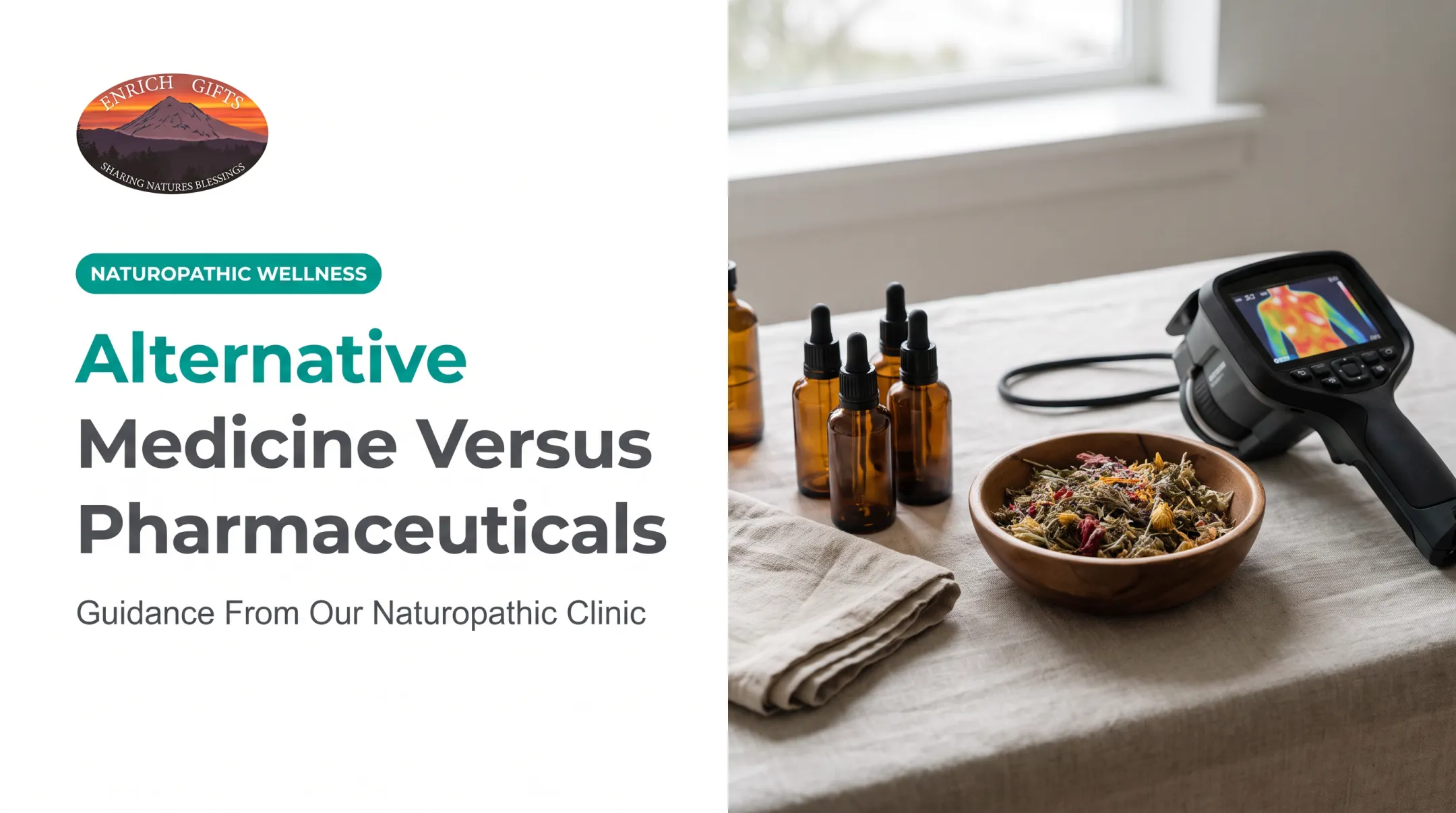
A personalized naturopathic consultation can help organize your goals, lifestyle information, and questions before you bring them to your broader care team. Enrich Gifts offers consultations with Dr. Carolyn Johansen through home visits and Zoom appointments in the Arlington, Texas, area. She uses functional testing tools like OligoScan and InBody analysis to help identify possible contributors to fatigue, inflammation, or stress.

That kind of guidance is meant to complement, not replace, a medical diagnosis, emergency care, or communication with a licensed physician and pharmacist.
What to Check Before Finalising an Alternative Medicine Approach
What to Check Before Finalizing an Alternative Medicine Approach
Don't choose an approach solely because it's described as natural, traditional, holistic, or "root-cause." None of those labels establish effectiveness or safety on their own.
Watch for these red flags:
- Promises of a guaranteed cure
- Pressure to buy large quantities of product upfront
- Discouragement from seeing a medical doctor
- Secrecy about ingredients or methods
- Claims that one treatment works for every condition
Before committing, weigh the practical side too: long-term cost, time, and monitoring requirements. Ask directly whether this approach could delay an effective diagnosis or treatment elsewhere.
Finally, confirm the logistics:
- How will progress and side effects be tracked?
- What signs would mean stopping?
- Who should you contact if symptoms get worse?
If a practitioner can't answer those questions clearly, that's worth noting.
Conclusion
Alternative medicine spans a huge range: supplements and herbs, mind-body practices, and entire traditional systems. Complementary and integrative care describe how those approaches get combined with conventional treatment, not what they contain.
Good decisions rest on a few practical checks:
- Review evidence for the specific therapy
- Verify practitioner qualifications
- Screen for interactions with medications or conditions
- Keep your full care team in the loop
Whole-person wellness is worth exploring. It works best alongside appropriate medical evaluation and proven treatment, not instead of them. For personalized guidance on supplements, testing, or root-cause wellness planning, Enrich Gifts offers naturopathic consultations and researched wellness products to help you choose carefully.
Frequently Asked Questions
Are holistic and alternative medicine the same?
No. Holistic describes a whole-person perspective that can include conventional treatment. Alternative generally means using a nonconventional approach instead of conventional care. The terms overlap sometimes but aren't interchangeable.
What are some examples of alternative medicines?
Common examples include herbal products, acupuncture, meditation, yoga, massage, Ayurveda, traditional Chinese medicine, and naturopathy. Safety and evidence vary widely by practice and how it's used.
What are examples of holistic treatments?
Holistic approaches often include nutrition and lifestyle guidance, stress management, mindfulness, movement, and sleep support, sometimes paired with selected complementary therapies. Not every approach treats or cures disease.
What is alternative medicine called now?
Health organizations increasingly use more specific terms: complementary health, integrative health, whole-person health, or naturopathic care. The terminology depends on how the approach is delivered and evaluated.