That's part of why non-contact, radiation-free imaging has caught the attention of people looking for wellness tools that don't involve needles, dyes, or waiting rooms full of machines. Infrared thermography uses a specialized camera to detect those surface-level temperature differences and turn them into a visual map, called a thermogram.
This article covers how thermography actually works, where it's used in wellness settings, what affects its accuracy, and why it works best as one piece of a larger health conversation rather than a standalone verdict.
Key Takeaways
- Infrared thermography produces a heat map, not a photograph or an internal anatomical scan.
- A thermal pattern can flag asymmetry or change, but it doesn't name the cause on its own.
- Camera quality, room conditions, and practitioner training all shape how useful the results are.
- Thermography supports, but never substitutes for, recommended medical screening or diagnostic tests.
What Is Infrared Thermography and How Does It Work?
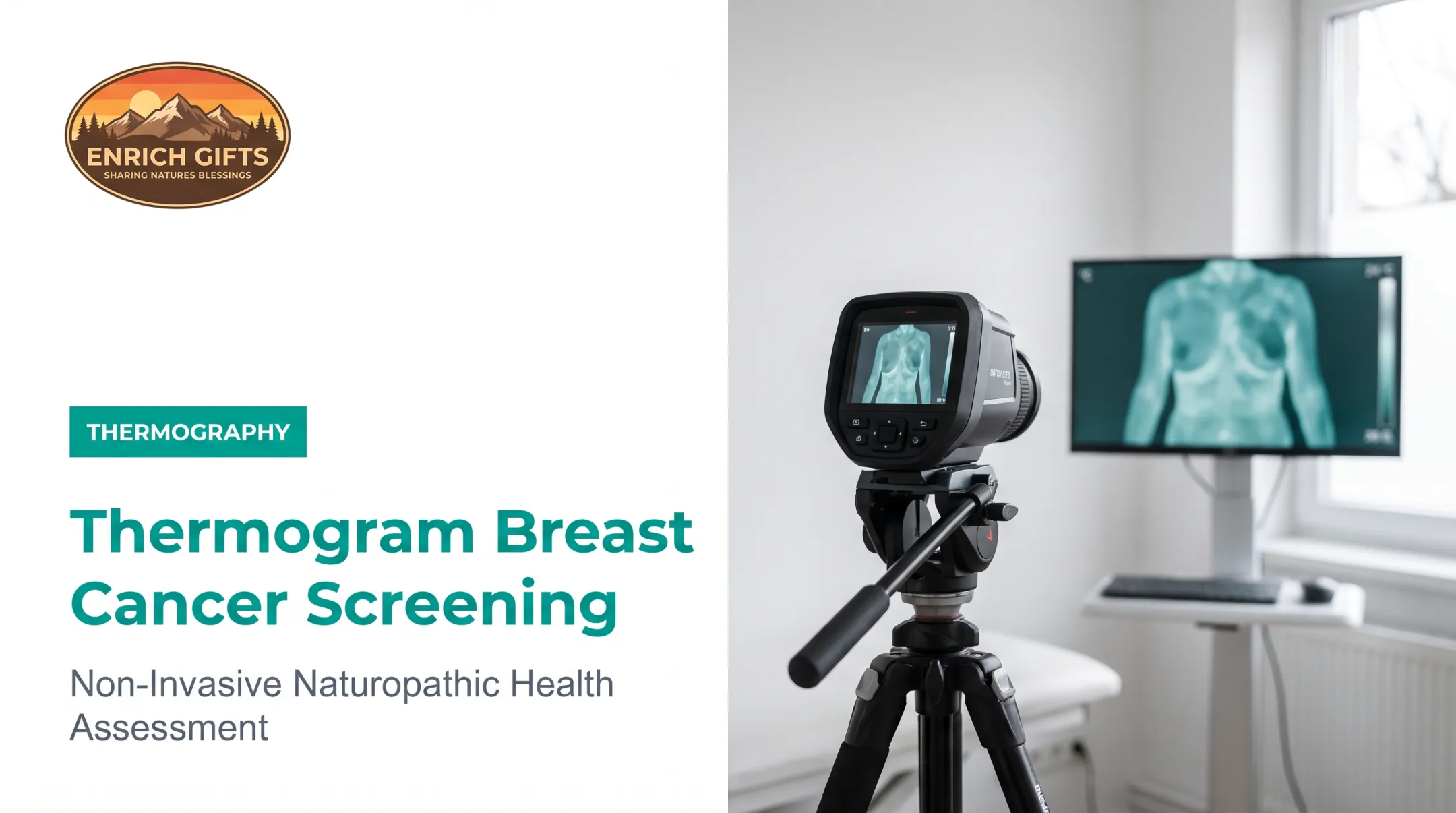
Every object warmer than absolute zero emits infrared radiation, and the amount and pattern of that radiation depends on its temperature. Human skin is no exception. A thermal imaging camera picks up this naturally emitted energy from the body's surface, without emitting any radiation of its own toward the person being scanned.
A few terms show up repeatedly:
- Thermogram – the resulting image showing surface temperature distribution
- Thermal pattern – the arrangement of warmer and cooler regions across that image
- Emissivity – how efficiently a surface radiates infrared energy compared to a perfect emitter; this value affects the calculated temperature
- Apparent surface temperature – the temperature the camera infers from incoming infrared energy, which can be slightly skewed by reflections or surface properties
From Skin to Screen: The Imaging Process
- Detection – The camera's sensor captures infrared energy radiating from the skin.
- Conversion – That energy is translated into electronic data points.
- Visualization – Software renders the data as a color-coded or grayscale image.
- Interpretation – A trained practitioner reviews the resulting patterns for asymmetries or areas worth discussing further.

Thermography differs from tools people often confuse it with. An infrared thermometer gives a single spot reading, useful for a quick check but no substitute for a full image. Thermography is also different from X-rays, ultrasound, and MRI, which look at internal structures. Thermography only sees the skin's surface.
The colors in a thermogram come from a selected display palette, not a universal code. FLIR, a major manufacturer of thermal cameras, documents that operators can switch between multiple color palettes to represent the same temperature data differently. A bright red zone does not automatically mean inflammation or disease. It is a visual choice for displaying a temperature value.
Passive thermography observes heat the body naturally emits. Active thermography introduces an external stimulus like controlled heating or cooling. Active methods show up more often in industrial and materials testing than in wellness settings.
What Is Infrared Thermography Used For?
In a wellness context, infrared thermography is used to observe surface temperature patterns and asymmetries that may add context to a broader health conversation. It does not diagnose conditions on its own.
Wellness Applications
Some practices use thermography to:
- Establish a baseline thermal pattern for future comparison
- Track changes in that pattern over months or years
- Flag areas that may warrant a conversation with a qualified practitioner
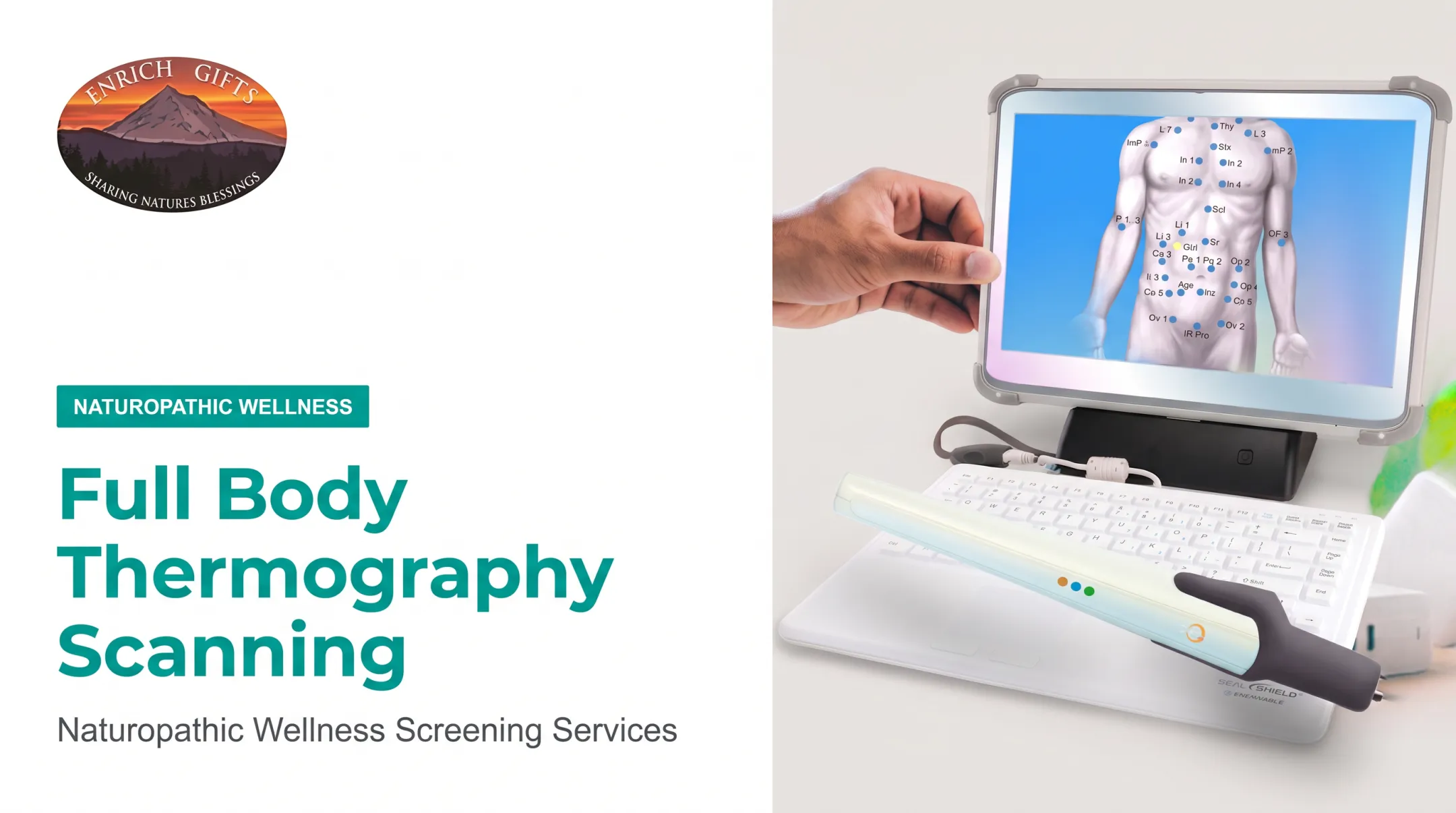
At Enrich Gifts, full-body thermography uses the AlfaSight 9000 system to capture heat patterns tied to blood flow and physiological activity across major body systems. This scan is often paired with other functional assessments, like OligoScan and Cardiovascular and Stress Screening, so the thermal data isn't interpreted in isolation.
Many clients repeat the scan annually to monitor how their patterns shift over time.
Beyond Wellness: Other Industries
The same core technology shows up far outside health settings. Building inspectors use thermal cameras to spot air leaks and plumbing issues. Electricians use them to catch overheating fuses before they fail.
None of that changes how the technology works in a wellness setting, but it explains why "thermography" appears in so many unrelated contexts.
A Pattern Isn't a Diagnosis
A warm or cool spot on a thermogram can reflect circulation, recent exercise, room temperature, a skin condition, or a stress response, not just an underlying illness.
That's why a responsible practitioner weighs thermal findings against health history, symptoms, lifestyle factors, and other assessments rather than treating the image as a complete answer.
Safety note: Thermography should never delay evaluation of concerning symptoms or replace recommended cancer screening, diagnostic imaging, or urgent medical care. The FDA has stated clearly that a thermogram is not a substitute for a mammogram, and that guidance applies broadly: thermography adds information, it doesn't replace established screening pathways.
How Accurate Is Infrared Thermography?
No single accuracy percentage applies to every use of infrared thermography. Results depend on the test purpose, the equipment, the environment, and how well-trained the interpreting practitioner is.
Two Different Kinds of "Accuracy"
Two concepts often get blurred together:
- Measurement accuracy – how closely the camera's reading reflects the true surface temperature
- Clinical accuracy – whether interpreting that reading correctly identifies a real health condition
A device can measure temperature precisely and still say little definitive about your health. Treating those ideas as the same thing overstates what any single scan can prove.
What Affects a Thermal Reading
| Factor | Why It Matters |
|---|---|
| Camera calibration & resolution | Poor calibration or low resolution reduces measurement precision |
| Distance, angle & focus | Off-angle or out-of-focus captures distort the reading |
| Room temperature & drafts | Unstable environments change the thermal scene being captured |
| Humidity & airflow | Moisture and air movement alter skin temperature readings |
| Recent activity or heat exposure | Exercise, hot showers, or sun exposure shift surface temperature temporarily |
Because of these variables, standardized preparation matters. That typically means giving the body time to acclimate to room temperature, avoiding recent heat or cold exposure, and following the provider's specific pre-scan instructions.
Those same variables help explain why published research is less consistent than many people assume. A peer-reviewed scoping review found that 48 of the studies examined, or 67%, did not report using a thermography performance standard. Only about half reported diagnostic-performance data at all. That gap is documented in a 2023 scoping review on infrared thermography covering medical diagnosis and screening uses.

False Positives and False Negatives
In plain terms:
- A false positive happens when an unusual pattern looks like a problem, but no real issue exists—often from a transient or environmental effect.
- A false negative happens when a normal-looking pattern offers false reassurance while a real issue is actually present.
If a result seems unexpected, unclear, or doesn't match your symptoms, follow-up testing is the next step—not self-diagnosis. Thermography can add context to a broader wellness assessment. It should not stand alone for diagnosing disease or replacing established screening tests.
What to Expect During a Thermography Session
A typical session follows a predictable non-contact sequence, though exact protocols vary by provider and equipment.
- Intake – A brief health history or intake conversation sets context for the scan.
- Explanation – The practitioner walks through what the procedure involves.
- Acclimatization – You'll sit in a controlled-temperature room for a period so your skin temperature stabilizes before imaging.
- Image capture – The camera captures images from the relevant angles.
- Review – The practitioner reviews the images, sometimes immediately, sometimes in a follow-up report.

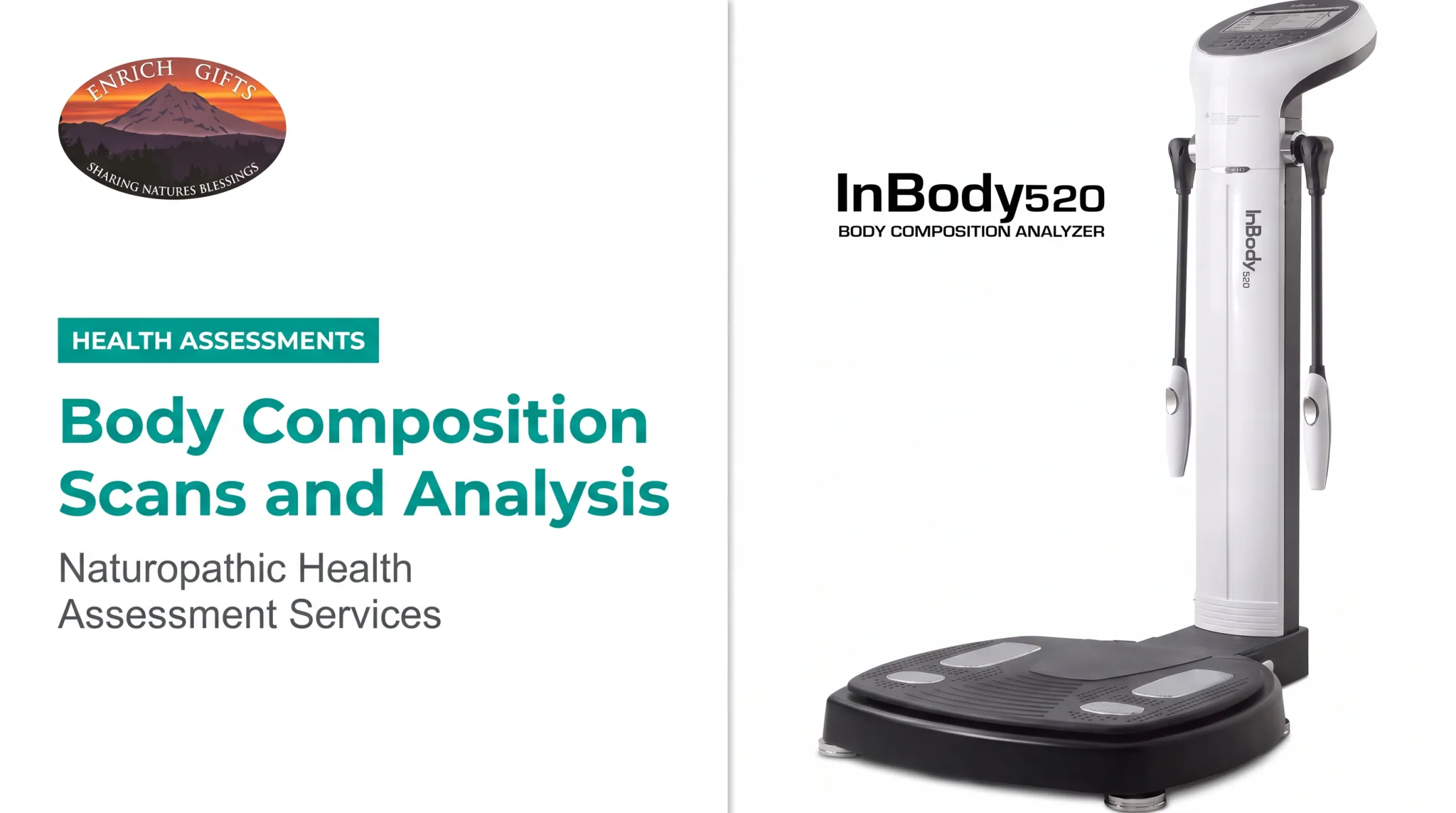
At Enrich Gifts, a full-body thermogram takes about 30 minutes, and Dr. Carolyn Johansen personally reviews each thermogram with the client, explaining the findings and outlining possible next steps. For clients combining the scan with OligoScan, Cardiovascular and Stress Screening, and InBody analysis, the full package runs about two hours including the results review.
Preparation Instructions
Most providers ask you to skip the following before a session:
- Strenuous exercise beforehand
- Hot or cold exposure (saunas, ice packs, sunbathing)
- Lotions, deodorants, or other topical products on the scanned area
- Caffeine or other stimulants
Confirm requirements with your provider. Training, testing, and equipment aren't uniform across the field, so one clinic's process can differ from another's.
What You'll Walk Away With
After a session, you can typically expect thermal images, a written interpretation, and recommendations for discussing anything notable with a healthcare professional. The scan itself involves no ionizing radiation and no physical compression.
Questions worth asking before you book:
- What training does the practitioner have?
- How often is the equipment calibrated?
- What preparation is required beforehand?
- How is my privacy protected?
- What are the fees, and what's included?
- Who reviews the results, and what happens if something looks abnormal?
How Thermography Fits Into a Broader Wellness Assessment
Thermography works best as one source of observational information inside a larger wellness conversation, not as a standalone conclusion about your health. A thermogram shows function and surface patterns, not tumors or anatomy, and it doesn't always reveal the exact cause behind a given finding.
A practitioner weighs thermal results alongside:
- Reported symptoms and health history
- Lifestyle and stress factors
- Physical observations during intake
- Other functional assessments, such as blood flow or body composition testing
At Enrich Gifts, naturopathic consultations and functional assessments, including thermography, are offered under the guidance of Dr. Carolyn Johansen, N.D. These services are framed as supportive wellness guidance, not a medical diagnosis.
Dr. Johansen works one-on-one with each client, so the pace, depth of testing, and follow-up can flex around that person's concerns and lifestyle rather than a one-size-fits-all script.
When to refer: Anything that looks medically concerning should go to a licensed healthcare professional for appropriate evaluation.
Disclaimer: Educational information about thermography does not diagnose, treat, or prevent disease. It should not replace advice from a qualified healthcare provider.
Frequently Asked Questions
What is an infrared thermography test used for?
It maps surface heat patterns across the body, which can offer supplementary information within a wellness assessment. On its own, it doesn't establish the cause of any finding it reveals.
How accurate is infrared thermography?
Accuracy depends on the equipment's calibration, the testing conditions, how well the client prepared, and the practitioner's training and interpretation. Evidence varies depending on the specific health application being discussed.
How does infrared thermography work?
A specialized camera detects infrared energy naturally emitted from the skin's surface and converts it into electronic data. Software then displays that data as a color-coded thermogram showing temperature differences.
Is infrared thermography safe?
Yes, it's non-contact and doesn't use ionizing radiation. Still, follow your provider's preparation instructions, and seek medical care promptly if you're experiencing symptoms that need attention.
Can infrared thermography replace a mammogram or other medical test?
No. It should never replace recommended screening or diagnostic testing. Talk with your healthcare professional about which tests are appropriate for your situation.
What should I do after an abnormal thermography result?
Don't try to self-diagnose based on colors or patterns alone. Review the finding with your thermography provider and a licensed healthcare professional for proper, clinically validated follow-up.