If you're wondering what a naturopathic doctor's training looks like, how this care differs from seeing an MD or DO, or whether it fits your situation, you're asking the right questions. This article walks through the methods, the training requirements, the evidence, and how to choose a qualified practitioner, so you can make an informed decision.
Key Takeaways
- Naturopathy combines lifestyle guidance, nutrition, botanical medicine, and other modalities within a practitioner's training and legal scope.
- "Naturopathic doctor" typically means someone who finished a formal naturopathic medical program; licensing varies by state.
- Natural therapies aren't automatically risk-free or effective—never delay emergency or medically necessary treatment.
- Verify credentials, ask about evidence and risks, disclose medications and supplements, and coordinate with your primary provider.
What Is Naturopathy?
Naturopathy, often called naturopathic medicine, is a whole-person healthcare approach that draws on traditional practices to address underlying contributors to illness. The National Center for Complementary and Integrative Health (NCCIH) describes it as a system focused on prevention and lifestyle, rather than a single standardized treatment protocol.
Core Principles Practitioners Reference
The American Association of Naturopathic Physicians outlines six guiding principles commonly cited in the field:
- The healing power of nature – supporting the body's inherent processes
- Identify and treat causes – looking beyond symptom suppression
- First, do no harm – choosing the least invasive effective option
- Doctor as teacher – educating patients, not just prescribing
- Treat the whole person – considering physical, emotional, and lifestyle factors
- Prevention – emphasizing habits that reduce future risk
These are statements of professional philosophy, not guarantees of clinical outcome. A single "root cause" rarely explains every symptom. A responsible practitioner still takes a thorough history, examines the patient, uses relevant testing, and refers out when something falls outside their scope.
How This Differs From General Wellness Advice
Not every person using the word "naturopath" has the same training. Formally trained, licensed naturopathic doctors differ from traditional naturopaths or general wellness coaches, whose education and oversight can vary substantially.
Dr. Carolyn Johansen of Enrich Gifts, for example, completed her doctorate in naturopathy in 2012. In consultations, she pairs functional testing with lifestyle guidance and looks at patterns across the whole person—not isolated lab values alone.
Training and scope also shape how care is delivered. Conventional medicine tends to rely more on pharmaceuticals, procedures, and specialist referrals. Naturopathic care leans more on lifestyle-based approaches. Many patients use both, coordinated with their respective providers.
What Does a Naturopathic Doctor Do?
A typical naturopathic visit starts with a detailed intake: health history, diet, sleep, stress levels, and current medications or supplements. From there, the practitioner identifies goals and builds a personalized plan.
Common therapies may include:
- Nutrition counseling and dietary changes
- Exercise and lifestyle guidance
- Stress-management strategies
- Botanical medicine and dietary supplements
- Physical medicine or hydrotherapy
Availability and legality of these therapies depend entirely on the state and the provider's training. What's permitted for a licensed ND in Oregon may not be permitted for a practitioner in a state without licensing laws.
Why People Seek This Kind of Care
People typically come in with general wellness goals, fatigue, digestive complaints, stress, allergies, or chronic pain. These are common reasons someone seeks this kind of guidance—not claims that naturopathy cures disease.
Enrich Gifts' approach follows a similar path. Clients often arrive with fatigue, brain fog, stubborn weight, or a general sense of "feeling off." Intake forms alone rarely show what is driving those symptoms, so functional testing helps fill in the gaps.
How Testing Fits Into a Care Plan
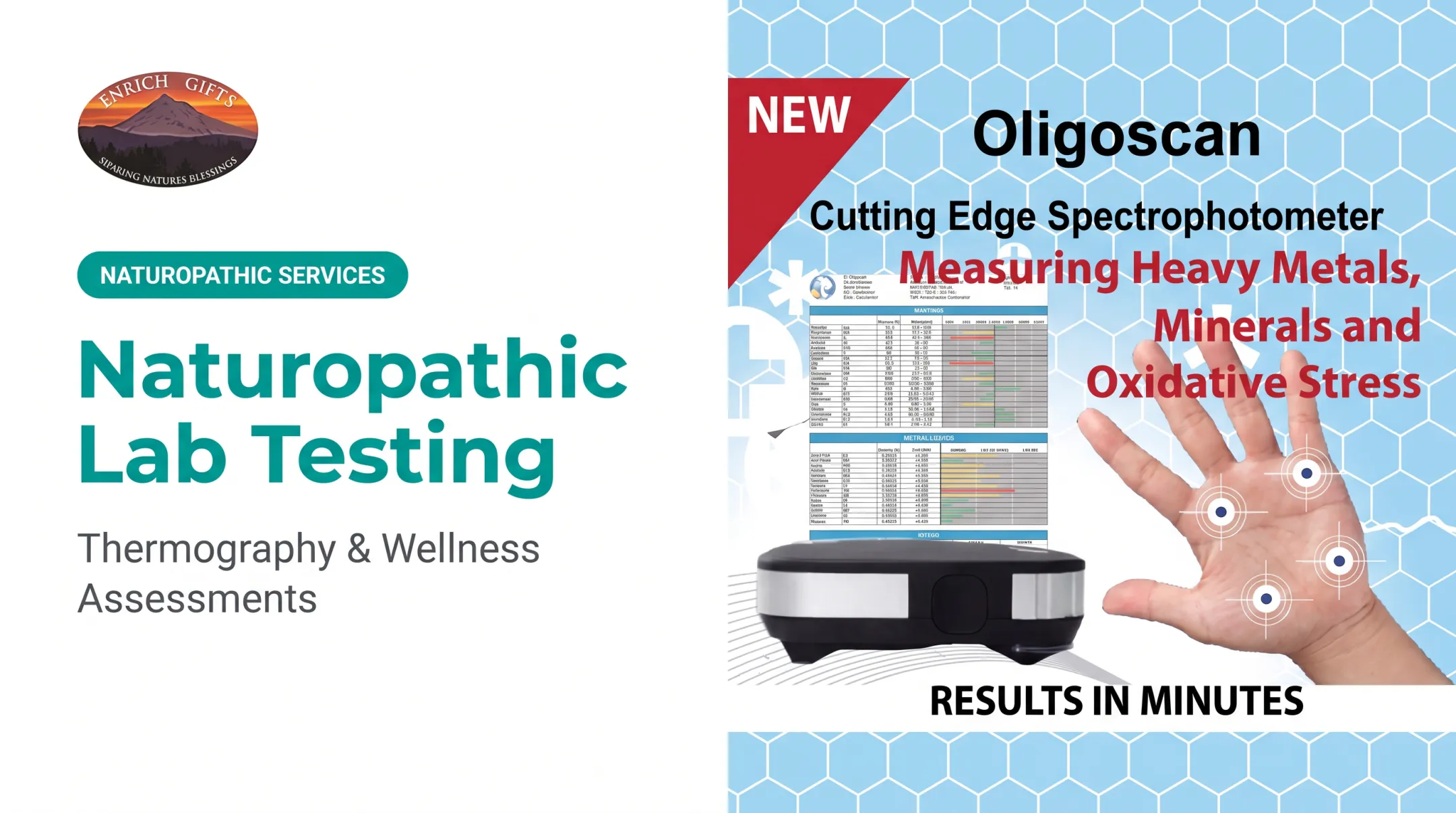
Some practitioners use functional testing to gather more data before finalizing a plan. Enrich Gifts' annual testing package, for example, combines a thermogram, OligoScan, cardiovascular and stress screening, and InBody body-composition analysis. These four tests, plus a results-review visit, take about two hours total. These tests vary in clinical validity. Results belong in a broader care picture, not as a standalone diagnosis.

A qualified practitioner should also recognize red flags. If something looks urgent, such as a symptom pattern suggesting infection or a serious condition, they should recommend conventional care and, with the patient's consent, communicate with that patient's other healthcare providers.
Training, Licensing, and Scope of Practice
This is where a lot of confusion happens, so let's be direct about it.
Do naturopathic doctors attend medical school? Not the same kind MDs or DOs attend. Naturopathic medical school and conventional medical school are accredited through entirely separate pathways, with different curricula and clinical training requirements.
The Council on Naturopathic Medical Education's 2025 standards require accredited ND programs to include at least 4,100 total study hours, with 1,200 of those being clinical training hours. That is a different degree pathway than an MD or DO program, which follows LCME or COCA accreditation standards respectively.
Titles Aren't All Equal
These labels can point to very different training backgrounds and legal categories:
- ND
- NMD
- Naturopath
- Traditional naturopath
Don't assume the word "doctor" means the same thing across providers. Check the specific credential.
Licensing status also varies dramatically by state. The American Association of Naturopathic Physicians lists licensing or registration laws in 23 states plus a few other jurisdictions, though even some of those have implementation gaps.
Here's a real-world example of how this plays out: Dr. Carolyn Johansen completed her naturopathic doctorate in 2012, but at the time, the state where she lived did not recognize her school; she was told only one program nationwide held that recognition.
After relocating to Texas in 2020, she found that Texas neither licenses nor restricts naturopaths. That distinction matters. Scope of practice there is shaped less by a licensing board and more by what an individual practitioner is trained and willing to offer.
State law controls whether a naturopathic doctor can diagnose, order tests, or prescribe. Check your state's licensing board—or confirm there isn't one—before assuming a service is authorized.
Benefits, Risks, and What the Evidence Means
Naturopathic care often emphasizes individualized attention, patient education, and prevention-oriented planning. Those are real features of the care model. They are not guarantees of a specific outcome.
Evidence Varies by Therapy, Not by Philosophy
Evidence for a specific intervention is not the same as evidence for naturopathy as a whole system. Exercise, nutrition changes, and certain supplements each carry their own research base.
A peer-reviewed study of adults with type 2 diabetes found that patients receiving adjunctive naturopathic visits alongside usual care saw HbA1c (a long-term blood sugar marker) drop 0.90 percentage points at six months. By 12 months, the advantage over usual care was no longer statistically significant. The study was observational—not a controlled trial proving naturopathy replaces diabetes treatment.

What that means in practice:
- Judge each therapy on its own evidence, not the philosophy label
- Adjunctive care is not a substitute for standard medical treatment
- Early gains may fade; lasting benefit still needs stronger trials
Safety Considerations You Shouldn't Skip
Risks worth taking seriously:
- Supplement-drug interactions, especially with botanicals
- Inconsistent product quality or contamination
- Allergic reactions or inappropriate dosing
- Delayed diagnosis if testing isn't interpreted carefully
- Unnecessary expense from unvalidated tests or treatments
At Enrich Gifts, Dr. Carolyn Johansen reviews whether a client's current supplements are helping, causing harm, or only adding cost. More supplements aren't automatically better.
When Not to Rely on Naturopathic Care Alone
Naturopathic care should never substitute for urgent or specialist treatment in situations like:
- Medical emergencies or rapidly worsening symptoms
- Serious infections
- Major injuries
- Cancer treatment decisions
- Any condition requiring prompt medical evaluation
If you're facing one of these, see a conventional provider first. Naturopathic guidance can complement that care afterward, not replace it in the moment.
Choosing a Naturopathic Doctor and Preparing for a Visit
Before you book, use a short checklist so you can verify credentials, scope of practice, and how care will fit with your existing medical team.
Evaluate the practitioner:
- Confirm the exact degree (ND, NMD, or traditional naturopath) and where it was earned
- Check whether your state licenses naturopathic doctors and whether this person holds an active license
- Ask about relevant clinical experience
- Clarify fees, telehealth or home-visit options, and privacy practices
- Confirm willingness to coordinate with your other healthcare providers
Questions to ask before starting treatment:
- What is this therapy intended to do?
- What evidence supports it?
- What are the possible side effects or interactions?
- What are the alternatives, and what's the total cost?
- When would you refer me elsewhere?
What to bring to your appointment:
- Complete medication and supplement list
- Relevant medical records or recent test results
- A timeline of your symptoms
- Known allergies and diagnoses
- Your specific health goals and questions
Never stop a prescribed medication without talking to the clinician who prescribed it, regardless of what a naturopathic consultation suggests.
As a local example, Enrich Gifts offers naturopathic consultations and functional health assessments with Dr. Carolyn Johansen, including home visits, Zoom appointments, and a free initial consult to gauge fit. If you consider any assessment, ask how it is validated and how the results will change your care plan.

This section is educational guidance on choosing a practitioner and preparing for a visit. It does not diagnose or treat individual conditions—seek qualified medical advice for personal symptoms or treatment decisions.
Frequently Asked Questions
Why are naturopathic doctors not covered by insurance?
Coverage depends on your insurer, plan, state rules, and the provider's credentials. Contact your insurer and the practitioner directly before your appointment to confirm what's reimbursable.
Do naturopathic doctors go to med school?
Licensed NDs complete a graduate-level naturopathic medical program with clinical training, but this is a separate accreditation pathway from MD or DO medical school. The curricula and clinical requirements aren't identical.
Can a naturopathic doctor be called a doctor?
Whether someone can use the title "doctor" depends on their specific credential and state law. Confirm the person's actual degree, license status, and scope of practice rather than relying on the title alone.
Is there a difference between a naturopath and a naturopathic doctor?
Yes. A licensed ND or NMD completed a formal, accredited naturopathic medical program, while a "traditional naturopath" may have very different training with less legal oversight. Always check the specific credential.
What does naturopathic medicine do?
It typically focuses on prevention, lifestyle changes, nutrition, and whole-person assessment, using selected natural therapies. Scope and methods vary by practitioner, and it's not a substitute for necessary medical care.
Does naturopathic medicine really work?
Effectiveness depends on the specific therapy, condition, and practitioner involved. Evaluate individual claims critically, and coordinate any naturopathic care with your conventional healthcare provider.